The Job
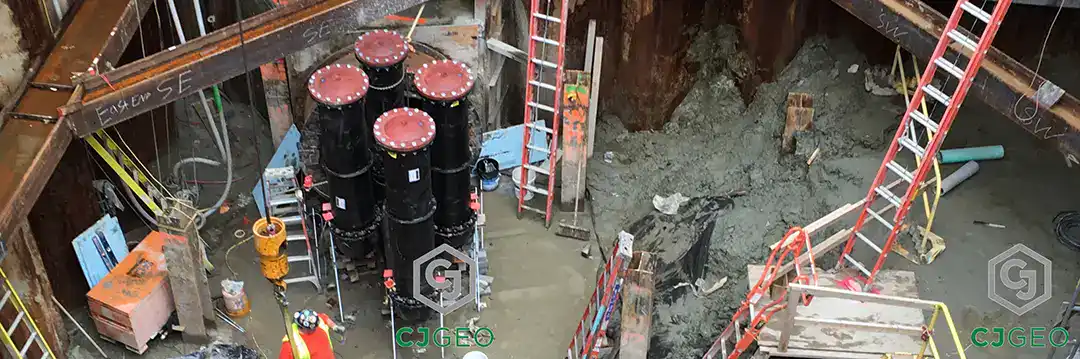
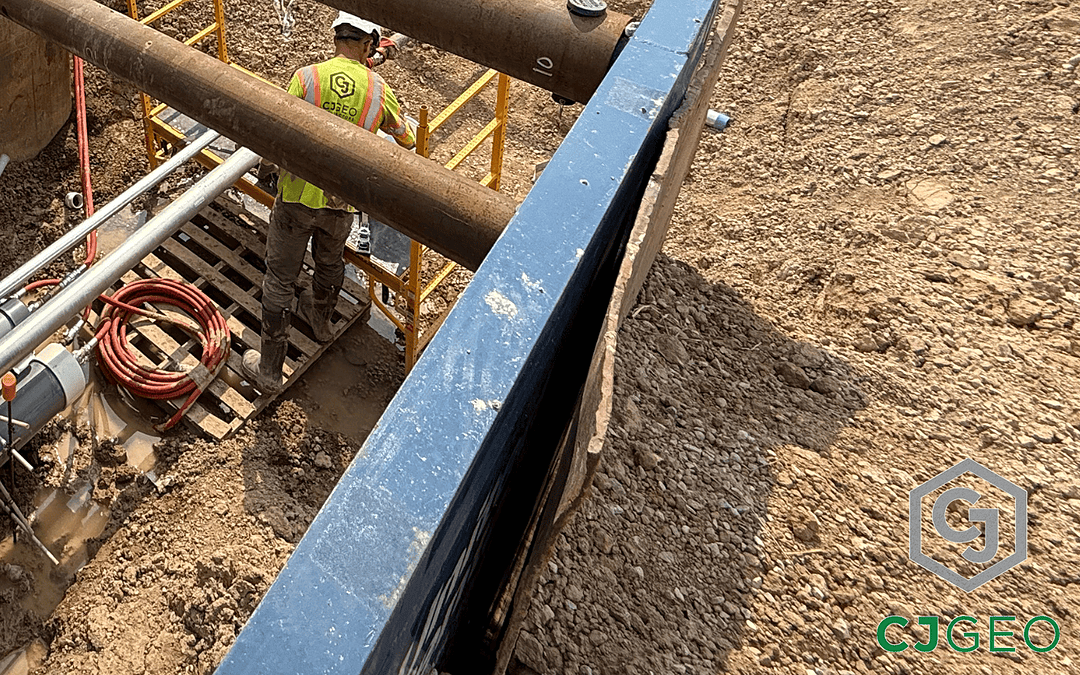
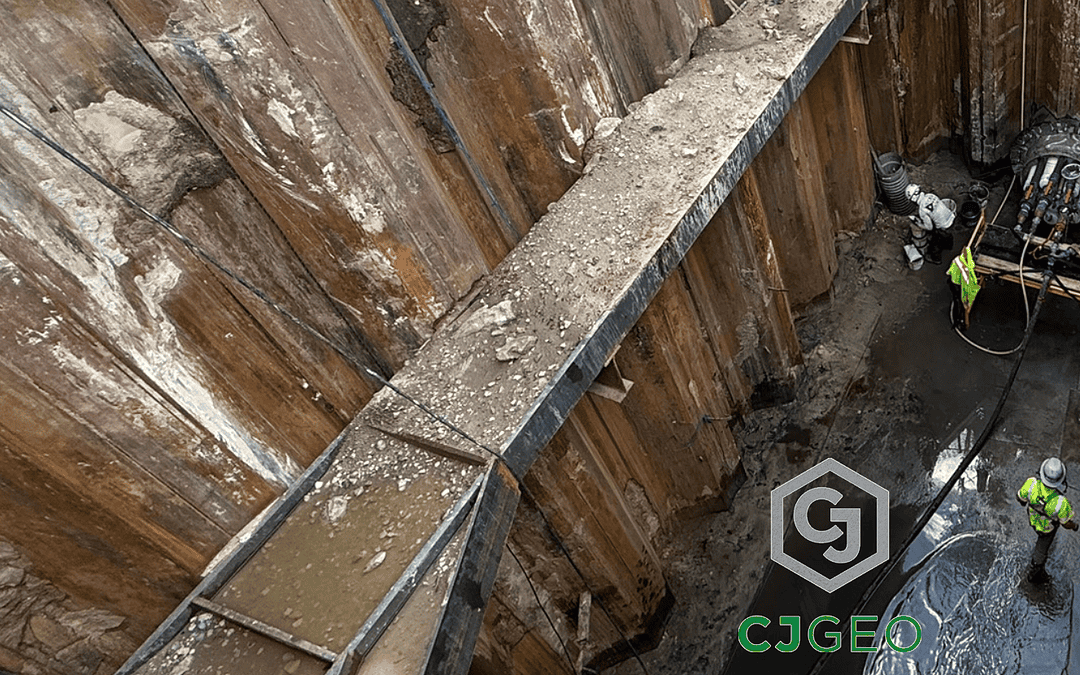
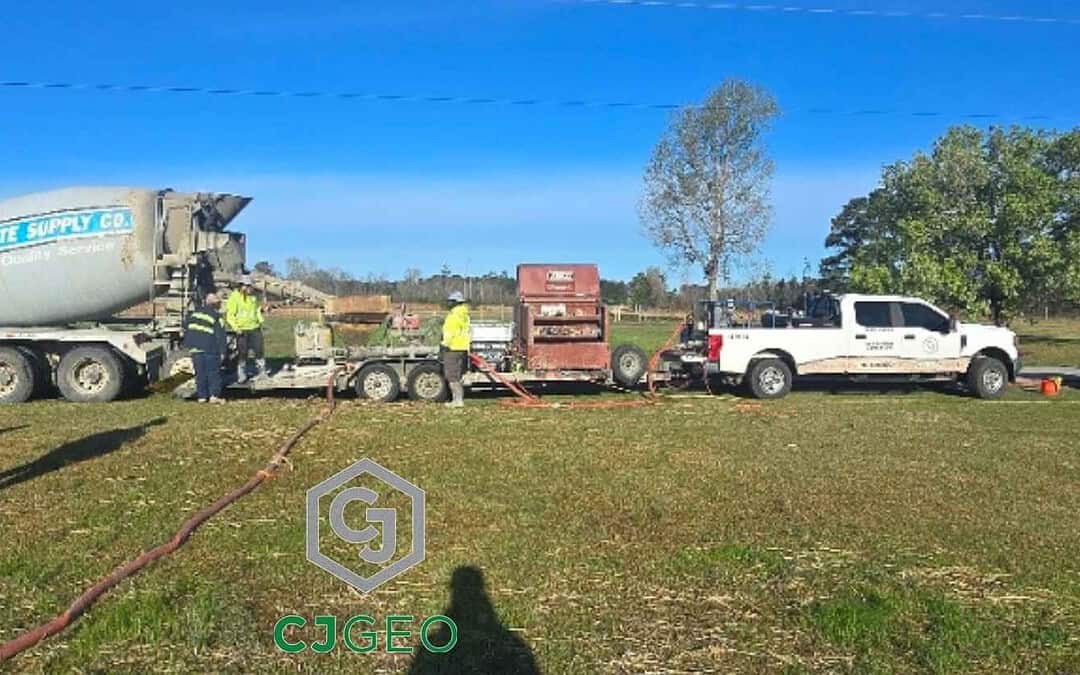
CJGeo performed annular space grouting for the Great Lakes Water Authority as part of the PCI-4 rehabilitation project in Detroit, Michigan. Located near Van Dyke Avenue and 8 Mile Road, this project involved three different liner systems for a large-diameter sewer. The longest section with a single liner type was approximately 800 linear feet.
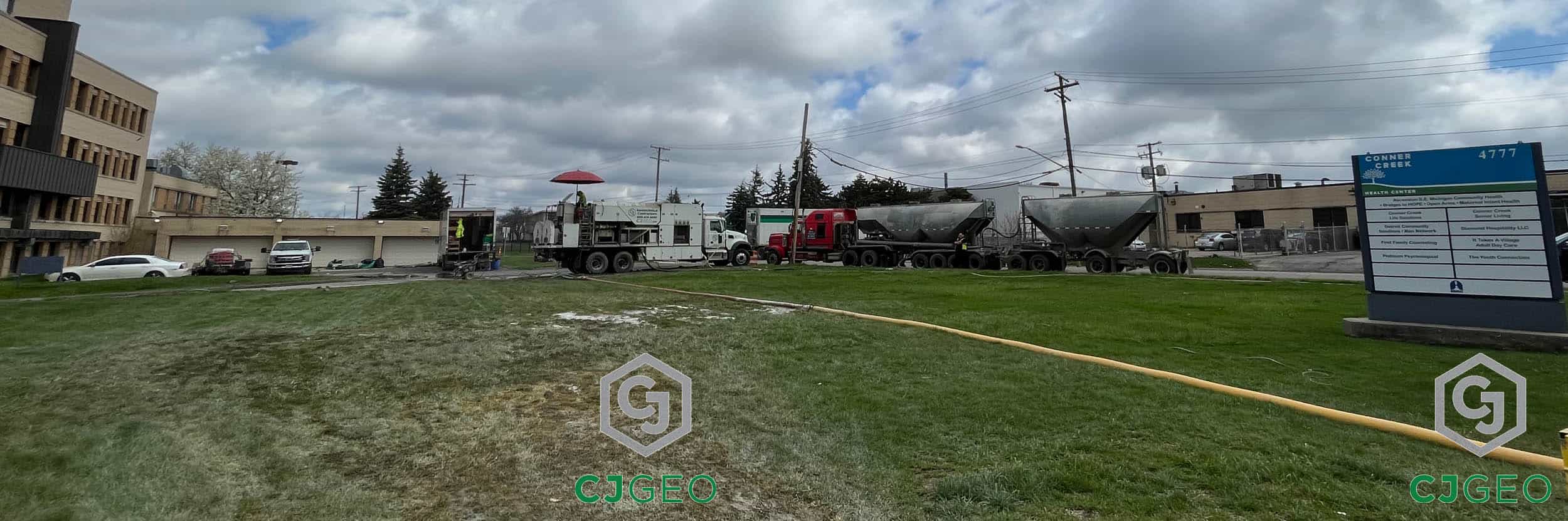
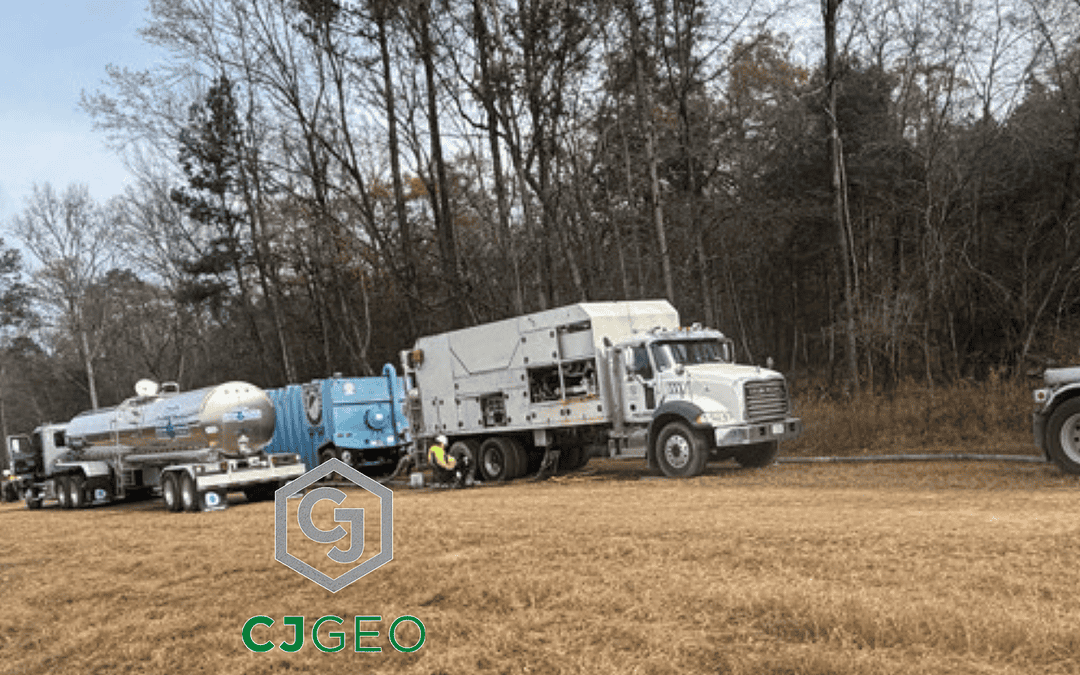
CJGeo equipment generating and pumping the grout into an access manhole.
The Challenge
The existing concrete sewer had an inner diameter of about 17.5 feet. The liner that required grouting had an outer diameter of approximately 16.5 feet, resulting in an annulus of nearly one cubic yard per linear foot. The pipe operated at full capacity at least once daily, so the annulus likely contained accumulated sewage. This required a solution that could displace the water and ensure the liner had consistent bearing.
The Solution
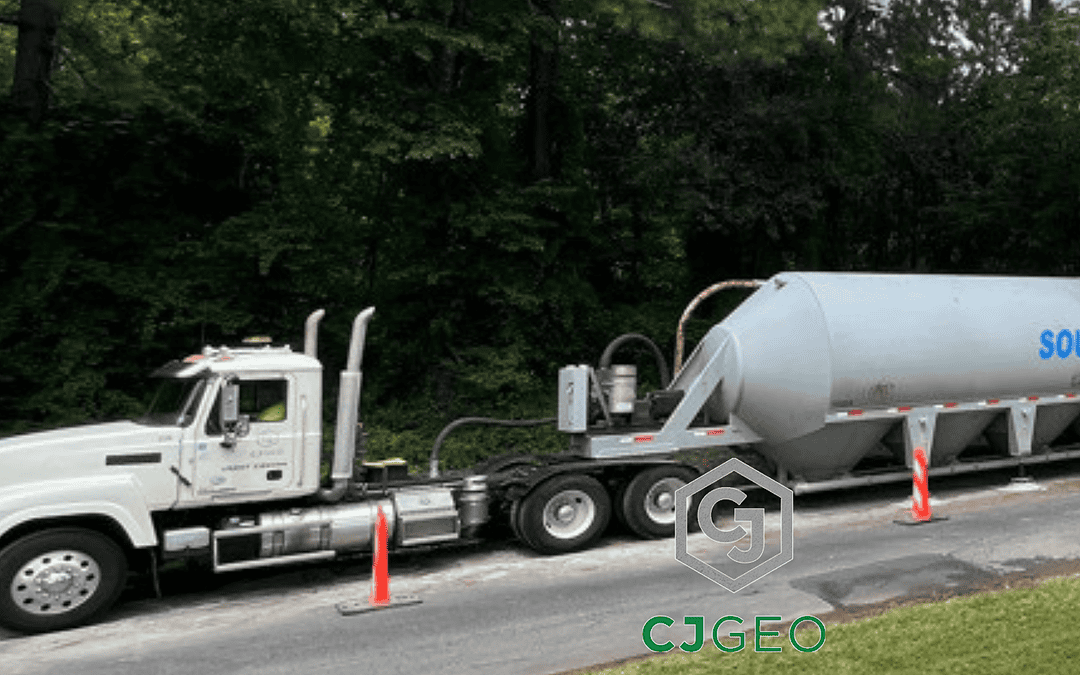
To displace the water and solids, CJGeo initially used 75lb/cuft CJFill-Under Water cellular grout, for the first lift. Although this density exceeded the required 300 psi compressive strength, it proved effective at displacing accumulated solids and water. After the first lift was in place, CJGeo lowered the wet-cast density of the cellular concrete to 45lb/cuft CJFill-Standard for subsequent lifts. This reduction in density helped manage buoyancy and allowed for taller lifts. To produce and pump the material up to 500 feet into the sewer line, CJGeo used an onsite dry mix batch plant.
Speak With An Expert
Facing a similar challenge?