
Chemical Grouting
Stop water. Solidify soil.
Chemical grouting is a broad term for using non-cementitious grouts, such as acrylates, prepolymers, resins, and solution grouts, which do not contain cement, for various uses such as soil strengthening and water control.
Because chemical grouts have lower viscosity and are slower-reacting than most plural-component polyurethanes, they excel in seeking out and sealing small water passages. This includes the void space between soil particles and cracks in structures.
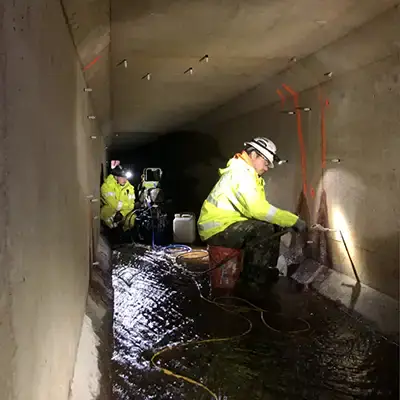
Crack Injection | Prepolymer Chemical Grout | SF575
Related Services
Undersealing
Low-viscosity, slower-reacting chemical grouts can be injected to fill small voids below concrete slabs where water accumulates and seeps through cracks or joints to the surface.
Leak Stopping
Chemical grouts can be used to fill voids and block water passages through cracks and joints, thereby preventing water intrusion and stabilizing structures.
Seepage Control
Low-viscosity, slower-reacting chemical grouts are excellent at seeking out and sealing small water passages, reducing water migration in porous soils.
Crack Injection
Utilizing specialized polyurethane, chemical, and acrylic formulations, crack injection seals active leaks to protect infrastructure from destructive water infiltration. Learn More
Curtain Grouting
Polyurethane and chemical grouts can be injected through structures to form a positive-side seal. This exterior barrier halts groundwater infiltration at the source. Learn More
Permeation Grouting
By uniformly saturating subgrade soils and fill, the right chemical grout can drastically reduce permeability while simultaneously increasing stability and bearing capacity. Learn More
Been There. Grouted That.®
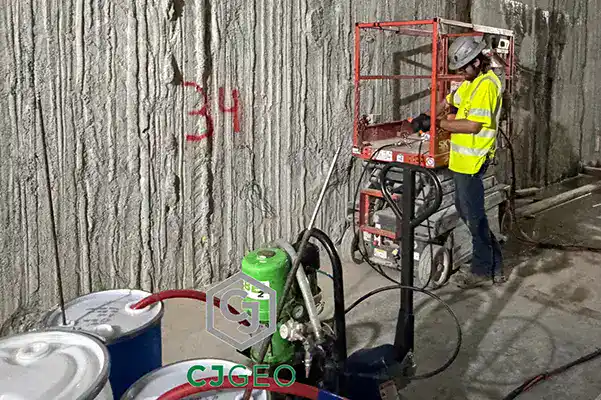
Massachusetts Chemical Grouting
At a Cambridge substation, multiple contractors failed to stop leaks in a 150-foot deep slurry wall using polyurethane. Recognizing the joints were too tight, CJGeo crews injected an ultra-low viscosity acrylic grout, successfully sealing over 100 vertical feet of leaks in a single day. Read More
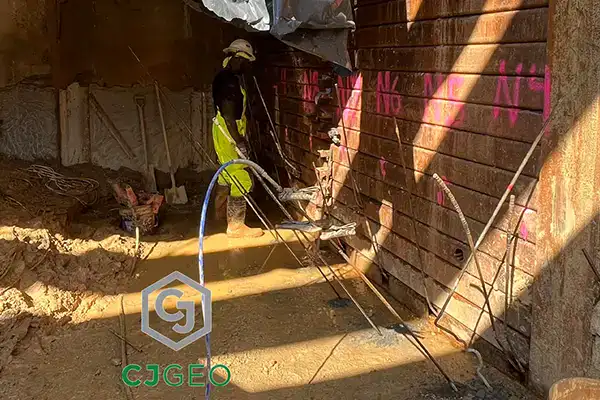
Slurry Wall Gap Closure Grouting
To stop rapid groundwater recharge at a 20-foot slurry wall gap, surface obstructions blocked standard drilling. CJGeo designed a custom percussion-driven tubing plan for permeation grouting. Crews injected acrylic grout to form a 14-foot deep curtain, safely allowing excavation to resume. Read More
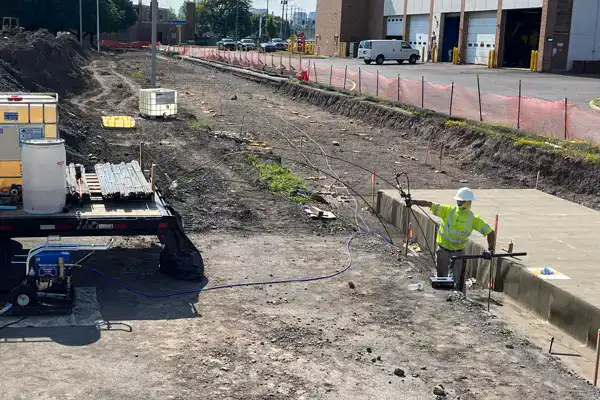
WWTP Tunnel Curtain Grouting
To repair a leaking 700-foot WWTP utility tunnel, dense interior pipes prevented traditional internal grouting. CJGeo designed a surface-based curtain grouting program. Crews injected 1,300 gallons of polyurethane resin through sacrificial tubes to successfully seal the structure. Read More
Material Selection Criteria
Prepolymer Chemical Grouts
Prepolymer chemical grouts react with moisture to expand up to 30 times their original volume. Geotechnical site conditions dictate the selection of grouts, while in the field, precise catalysts control the reaction profile. Set times are engineered to match soil characteristics, ambient temperatures, leak volumes, and flow velocity.
Acrylic Grouts
Engineered with water-like viscosity, non-expansive acrylic grouts uniformly permeate soils without fracturing the subgrade. These formulations are often specified to halt groundwater intrusion and glue soils together. Acrylics excel when access is critical, yielding an impermeable yet hand-excavatable soil mass.
Mineral Grouts
Mineral grouts, such as colloidal silica, feature exceptionally low viscosity and highly controllable reaction profiles. These formulations are completely non-expanding and non-exothermic. Mineral grouts are well suited for permeation grouting through TAM tubing and water cutoff applications.
Plural Component Polyurethanes
Plural component geotechnical polyurethanes are considered a type of chemical grout. However, plural component polyurethanes have significantly different physical properties. Geotechnical and structural polyurethane grouts are highly expansive, rigid formulations that rely entirely on a two-component reaction occurring without moisture.

Curtain Grouting
Prepolymer Chemical Grout | SF4727
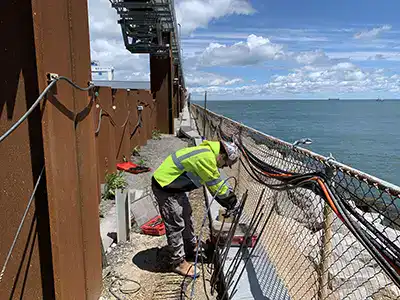
Seepage Control
Prepolymer Chemical Grout | SF4112
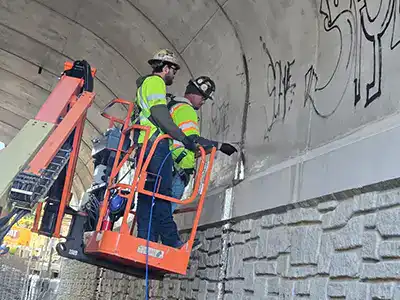
Crack Injection
Prepolymer Chemical Grout | SF6038
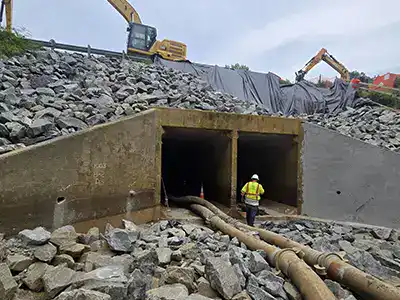
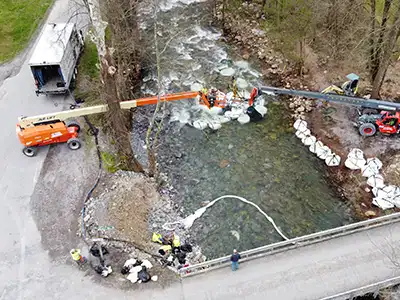
Leak Stopping
Plural Component Polyurethane | SF5852
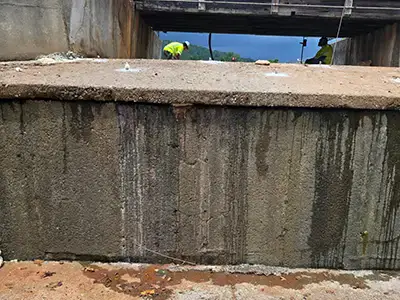
Undersealing
Plural Component Polyurethane | SF6115
Leak Stopping
Plural Component Polyurethane Grout | SF1353
Frequently Asked Questions
Speak With An Expert
Facing a challenge?