The Job
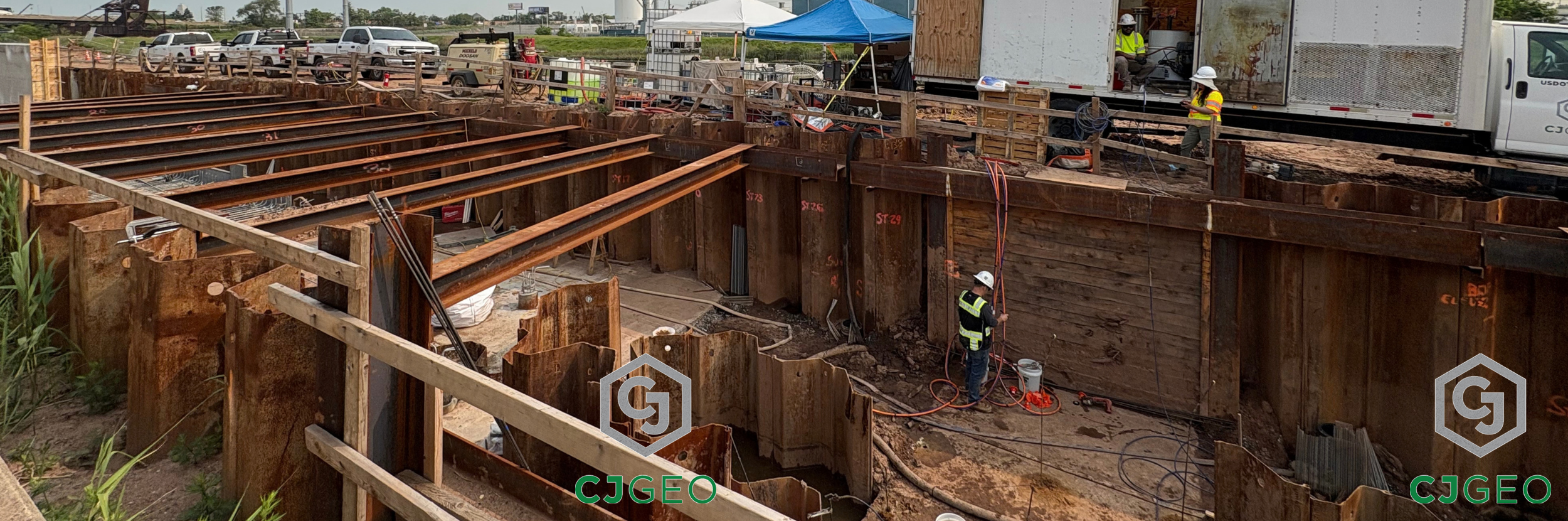
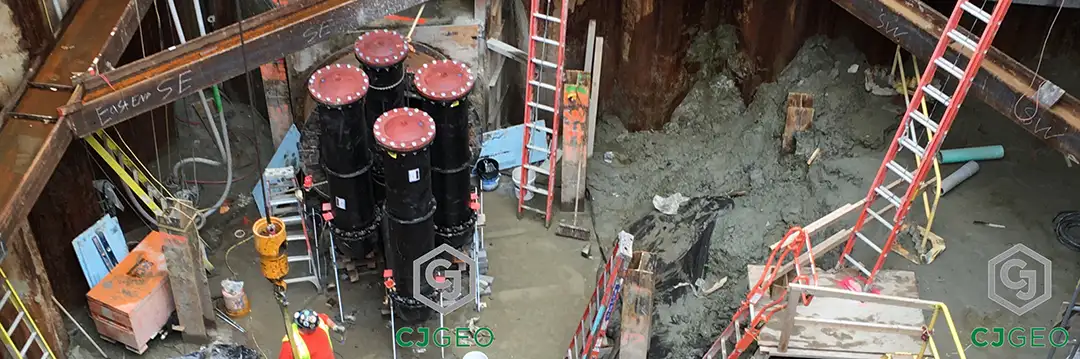
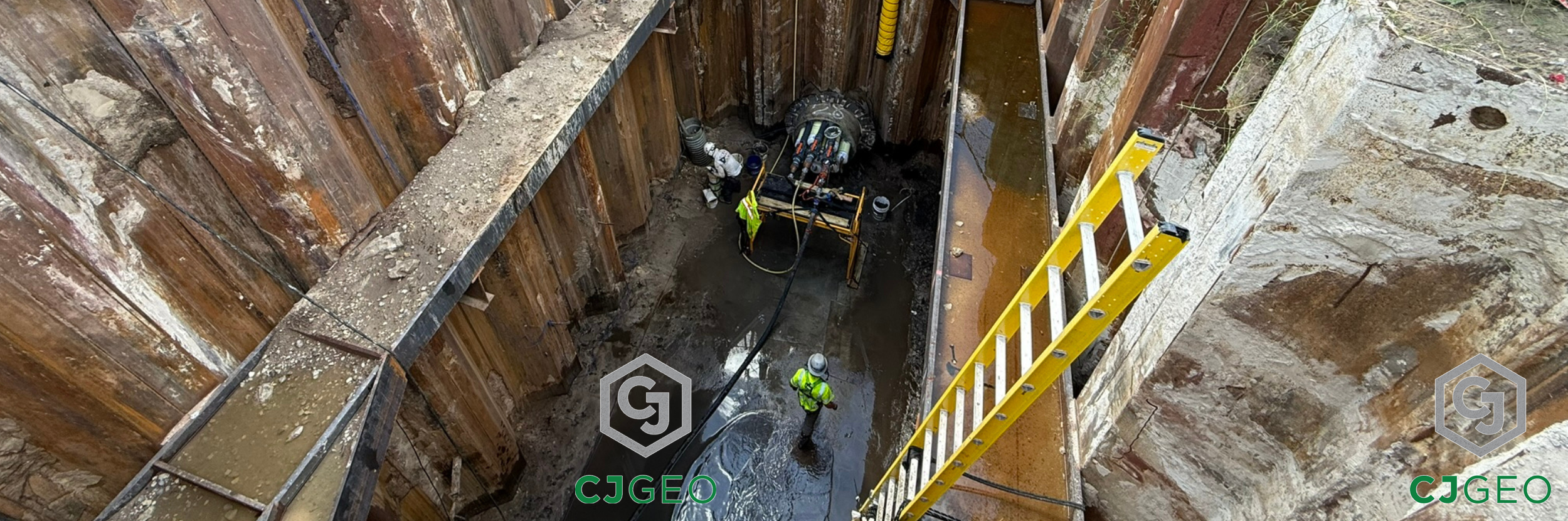
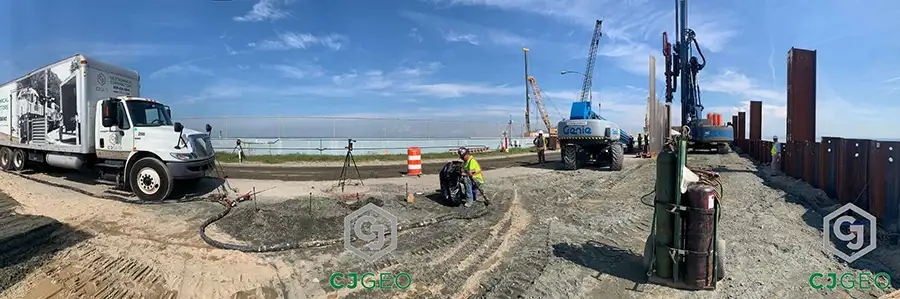
This Massachusetts chemical grouting project by CJGeo is located in Cambridge. As part of a new, massive underground electrical substation, 150' deep slurry walls were installed around the perimeter of an entire city block. It's fairly common for slurry wall joints to leak. However, before the site could be turned over to Eversource, all the joints in the structure had to be completely dry.
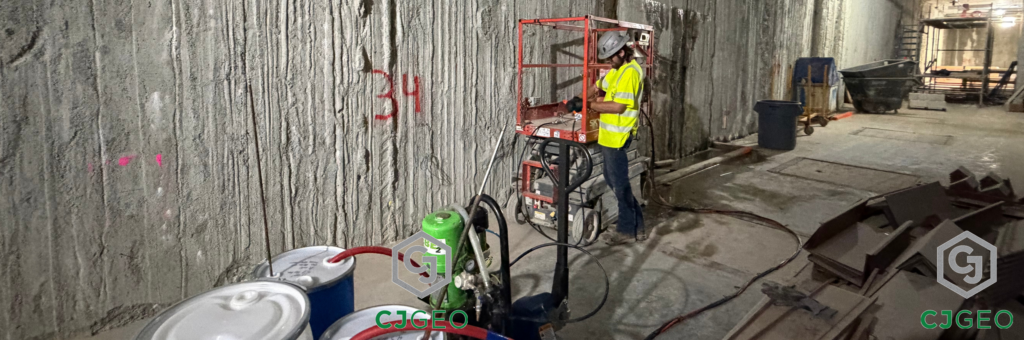
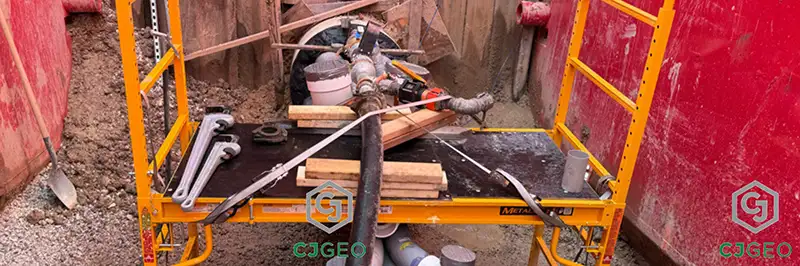
Not fancy, but functional.
The Challenge
Multiple contractors attempted to stop the leaks in the slurry wall joints, using various polyurethane grouts. This was somewhat successful in addressing the largest flows, but was unsuccessful stopping weeping leaks. Two local waterproofing contractors and the mining services arm of a chemical grout manufacturer all worked on the site. After months of ultimately unsuccessful repairs, the site's geotech EOR recommended CJGeo to the general contractor.
The Solution
Massachusetts chemical grouting.
CJGeo visited the site to inspect the leaks. It was abundantly clear that polyurethane chemical grout had not worked. The joints were too tight for even very low viscosity polyurethane to uniformly seal. Based on this, CJGeo recommended acrylic grout. Acrylic grout is indistinguishable from water, so is ideal for very tight cracks and joints.
On our first day onsite, CJGeo was able to stop nearly 100VF of leaks in various joints. This was more than all the previous contractors had achieved in more than six months. Due to the extensive construction activities, along with numerous walls, CJGeo deconstructed and palletized a small chemical grouting set up to move around the various basement levels with a pallet jack.
Speak With An Expert
Facing a challenge similar to this Massachusetts chemical grouting job?