
Cellular Grouting
Been There. Grouted That.®
Cellular grout, or low-density cellular concrete, is a highly flowable, ultra-lightweight cementitious fill perfectly engineered for complex utility grouting. By replacing heavy traditional aggregates with a specialized foaming agent, this material entrains up to 80% air to completely fill abandoned pipes and annular spaces while virtually eliminating the risk of blockages.
Cellular grout maintains exceptionally low placement pressures, effectively mitigating carrier pipe buoyancy and preventing bulkhead blowouts. Generated continuously on-site at rates exceeding 200 cubic yards per hour, the material can be pumped up to a mile from a single access point, executing massive long-run utility abandonments without costly intermediate excavations.
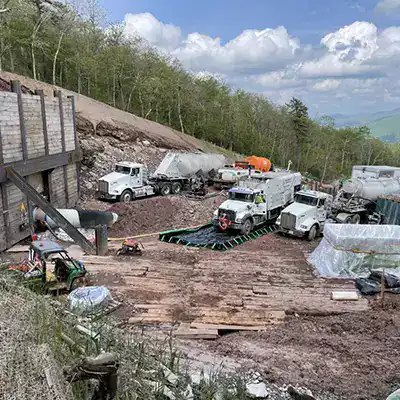
Annular Space Grouting | CJFill Ultra Lightweight | SF4923
Related Services
Annular Space Grouting
Cellular grout’s exceptionally low pumping pressures prevent over-pressurization and mitigate carrier pipe buoyancy. This often eliminates multi-stage installations, enabling rapid, highly efficient single-lift placements. Learn More
Pipe Abandonment
Cellular grout enables 5,000-foot continuous pipe abandonments without intermediate excavations. High-volume, single-point placement drastically reduces project costs, mitigates utility strike risks, and accelerates schedules. Learn More
Underground Structure Fills
Filling abandoned utility structures with cellular concrete blocks groundwater and prevents surface collapse. The ultra-lightweight material minimizes lateral pressure on adjacent infrastructure and prevents load-induced settlement.
Been There. Grouted That.®
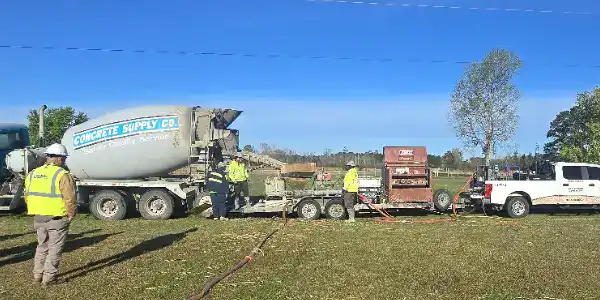
PNG Line 2 Decommissioning
For a 12-inch gas main abandonment under active NC roads and railways, CJGeo performed cellular grouting on nine pipe crossings. Crews pumped 145 cubic yards of flowable cellular grout from single injection points, ensuring stable fills without costly, disruptive excavations. Read More >
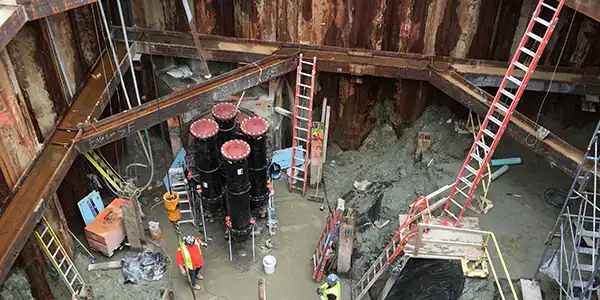
Massachusetts Cellular Grouting
CJGeo tackled a 200-foot microtunnel grouting project under the MBTA Red Line in Cambridge. To overcome severe carrier pipe buoyancy risks across six pipes, crews pumped 30lb/cuft CJFill-Ultra Lightweight cellular grout, safely completing the placement in just two hours. Read More >

HDD Conductor Casing Grouting
To safely displace drilling fluid and grout two 48-inch HDD conductor casings containing 24-inch PVC pipe in Florida, CJGeo pumped 80lb/cuft CJFill-Under Water cellular grout. Crews minimized heat and pressure on the PVC, successfully completing the job in just one day. Read More >
Advantages of Cellular Grout vs Traditional Flowable Fill
Risk Reduction
Using cellular concrete for pipe and structure abandonments prevents load-induced settlement and surface collapse. Ultra-low placement pressures prevent pipe buoyancy and protect adjacent structures. On-site generation reduces heavy delivery traffic, with raw slurry expansion ratios up to 4x.
Time Reduction
For large-scale underground abandonments, cellular grout is significantly more cost-effective than traditional flowable fills. Because the material can be pumped incredibly long distances, costly intermediate access points and multi-stage pouring requirements are frequently eliminated entirely.
Cost Reduction
Cellular grout generation and placement can reach upwards of 200+ cubic yards per hour. This rapid production reduces labor and accelerates schedules while mitigating the risk of failed abandonments. These combined efficiencies deliver comprehensive project savings far beyond the per-yard material cost.
The CJFill Advantage
Operating as both manufacturers and installers of low-density cellular concrete, CJGeo integrates real-world field experience into the formulation of CJFill®. This specialized line of cellular concrete is engineered to match project design parameters with the appropriate density, compressive strength, and flowability required. The result is a highly predictable solution for abandoning infrastructure, like pipes and culverts, and filling subterranean structures.

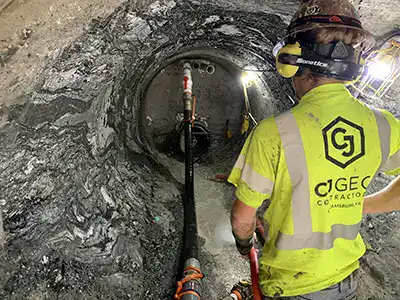
Annular Space Grouting
CJFill Ultra Lightweight | SF846
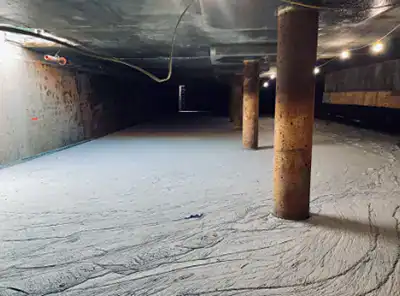
Underground Structure Fill
CJFill Ultra Lightweight | SF1180
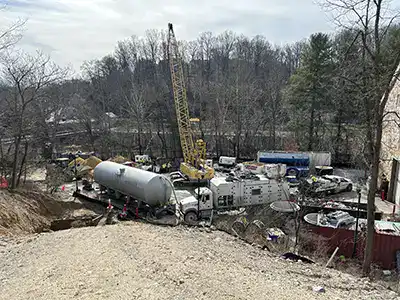
Annular Space Grouting
CJFill Underwater Sanded | SF2633
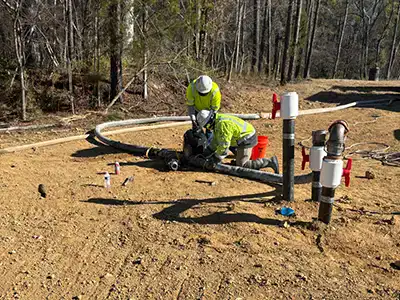
Pipe Abandonment
CJFill Ultra Lightweight | SF3445
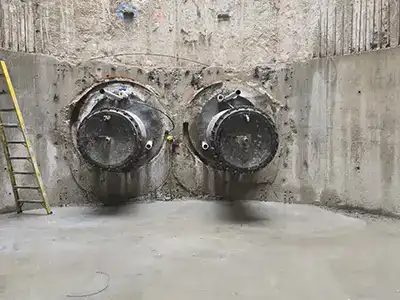
Annular Space Grouting
CJFill Higher Strength | SF5626
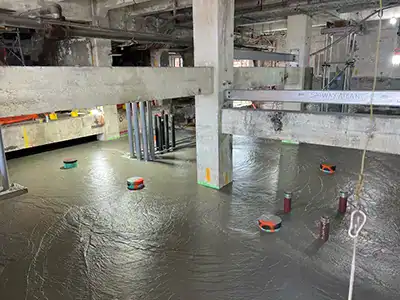
Underground Structure Fill
CJFill Ultra Lightweight | SFF5243
Generation Methods
Matching the exact generation method to individual project volume ensures optimal efficiency. CJGeo manufactures and installs CJFill low-density cellular grout in two ways.
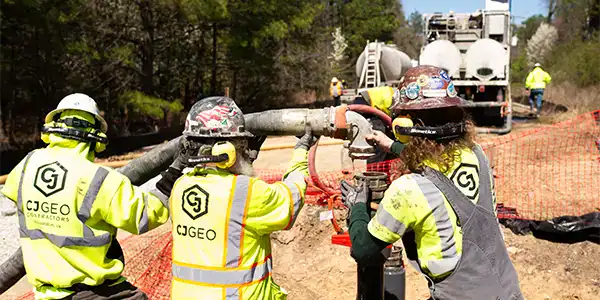
Dry Batch | Higher Volume or Deep Lifts
Computerized on-site plants utilize high-energy colloidal mixers to combine dry materials and water, creating a structural matrix that protects entrained bubbles for lifts up to 10 feet. Three highly mobile tandem-chassis plants maximize efficiency, reliably placing up to 200+ cubic yards per hour. Learn More about Dry Batch cellular concrete generation.
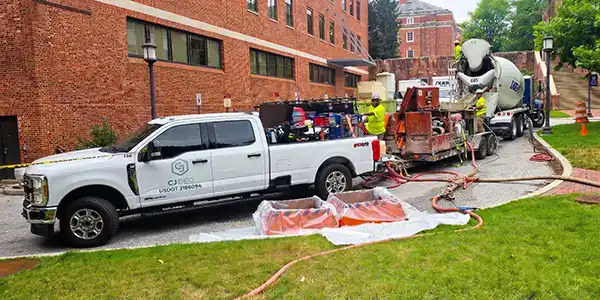
Wet Batch | Lower Volume or Tight Access
Utilizing traditional ready-mix trucks to deliver cement slurry, foam is injected directly on-site. CJGeo’s three dedicated wet batch systems generate up to 70 cubic yards per hour, ensuring an economical, highly efficient solution for smaller placements and confined job sites. Learn more about Wet Batch / Truck Batch cellular concrete generation.
Frequently Asked Questions
Speak With An Expert
Facing a challenge?