
Compaction Grouting
Been There. Grouted That.®
The goal of compaction grouting is to compress adjacent soil particles to reduce void ratios and increase bearing capacity. The method between polyurethane and cementitious varies greatly in delivery, containment, and densification.
Polyurethane Compaction Grouting
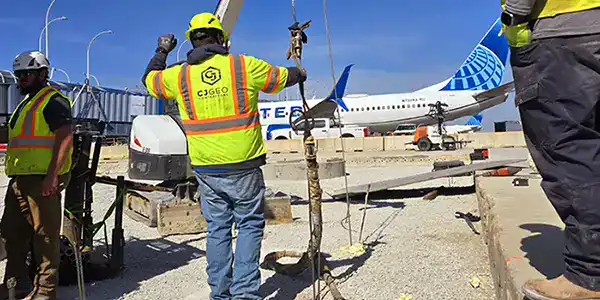
Geotechnical polyurethanes enter the subgrade as low-viscosity liquids, flowing into macro-voids before initiating an exothermic reaction. Gel times are engineered to range from seconds to minutes. Once gelling occurs, lateral movement ceases, and isotropic volumetric expansion begins, exerting radial pressure against surrounding soil grains.
Cementitious Compaction Grouting
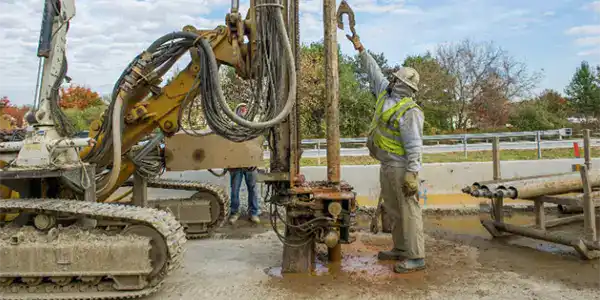
Low-mobility cementitious grouts rely on high pump pressure to extrude a low-slump (<1 inch) mortar bulb. The grout bulb does not expand volumetrically; compaction is driven entirely by the mechanical displacement of material from the injection pump.
Key Applications
Slab Stabilization
Precisely stabilizing concrete slabs, roadway pavements, and spread footings by addressing compromised subgrades deep below the structural load.
Soil Densification
Consolidating loose, granular soils or uncontrolled fill to increase overall allowable bearing capacity and mitigate settlement risks.
Sinkhole Remediation
Sealing subsurface karst features, filling deep subterranean voids, and halting active soil washouts around compromised stormwater pipe and culvert infrastructure.
Seawall and Bulkhead Remediation
Halting tidal washouts and stabilizing compromised backfill behind coastal retaining structures.
Polyurethane Compaction Grouting
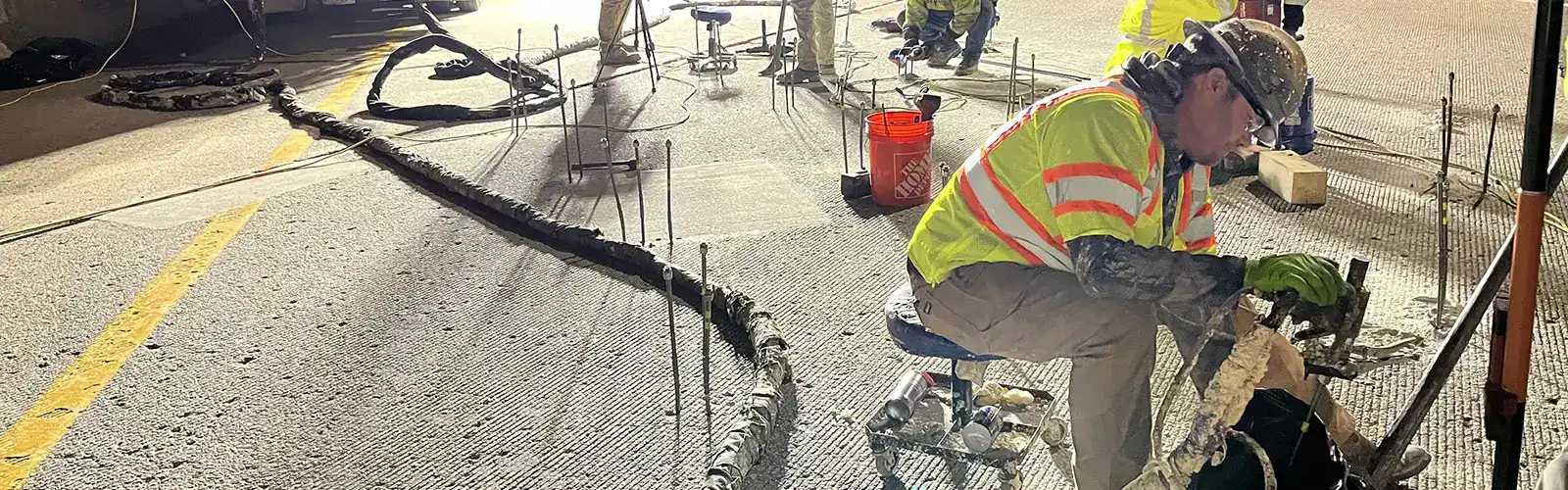
Polyurethane compaction grouting achieves soil densification through the chemical expansion of geotechnical polymers, rather than through traditional cement-based methods such as Low Mobility Grouting (LMG) or Low-Mobility Cementitious (LMC). This process provides a highly controlled, low-impact mechanism for increasing the bearing capacity of loose soils and correcting structural settlement.
Precise execution relies on accurate site data. Prior to injection, exploratory geotechnical testing, bores, or Dynamic Cone Penetrometer (DCP) testing are required to map the subgrade and establish a targeted depth profile.
Been There. Grouted That.®
South Carolina Compaction Grouting
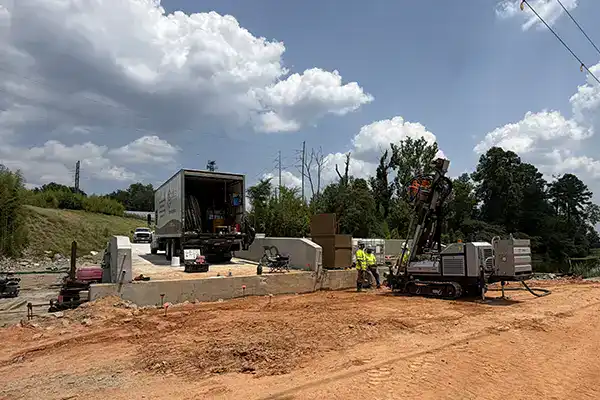
When bridge caisson soil loss threatened a Columbia water project, CJGeo utilized polyurethane compaction grouting. Navigating 20' height limits and strict FERC rules, crews used a 15' sonic drill to inject 3,600 lbs of CJGrout 22SHV to securely encapsulate and stabilize the affected piers. Read More >
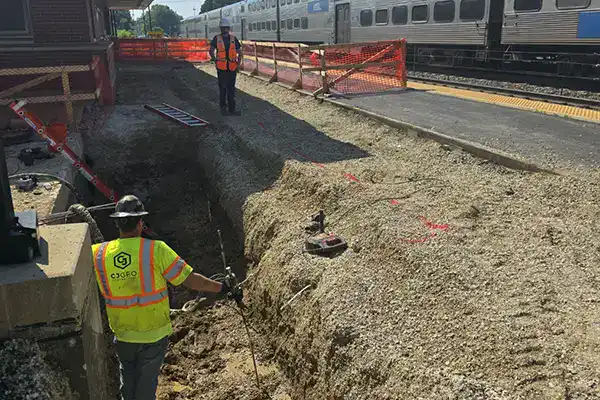
Pingree Station Polyurethane Grouting
Supporting a new METRA platform and failing retaining wall at Pingree Station required rapid soil stabilization. Meeting a strict 2-million-pound experience threshold, CJGeo crews performed polyurethane compaction grouting with CJGrout 48NHL in a single day, allowing for immediate backfilling. Read More >
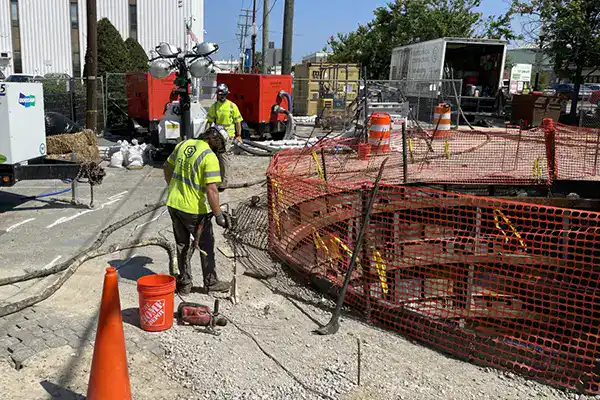
Tunnel Shaft Sinkhole Grouting
After a tunnel shaft blew out and flooded in Newport News, massive sinkholes halted construction. CJGeo crews quickly mobilized, performing polyurethane compaction grouting with CJGrout 35NHV61. Filling 70 cubic yards of voids stabilized the shaft, allowing dewatering and excavation to resume. Read More >
Polyurethane vs. Traditional Cementitious Compaction Grouting
| Polyurethane Compaction Grouting | Cementitious Compaction Grouting | |
|---|---|---|
| Installation | In-situ chemical expansion of closed-cell, plural-component polyurethanes | Hydraulic/mechanical pressure of cementitious grout delivered by a grout pump |
| Density & Load | 2 to 8 lbs/cu.ft.; adds minimal structural load to weak soils | 120 to 140 lbs/cu.ft.; adds significant overburden weight |
| Material Properties | Initial liquid state; rapid viscosity buildup with defined gel time, potable water safe | High-yield shear stress; stiff mortar maintaining constant slump throughout placement |
| Cure Time & Return to Service | Reaches 95% compressive strength within 15 to 30 minutes for immediate loading | Extended cure times requiring 7 to 28 days for structural strength gain |
| Site Logistics | 1/2-inch steel tubing installed via light hammer; supported by a single box truck and dragged hoses. | 2- to 4-inch heavy steel casing requiring rotary drill rigs, on-site batch plants, and wash pits |
| Environmental Factors | Hydro-insensitive; cures predictably and maintains integrity in high water tables | High risk of material wash-out or cement paste dilution in active groundwater |
The CJGrout Advantage
CJGrout®, CJGeo’s own line of polyurethane grouts, is formulated to suit a wide variety of projects, drawing on CJGeo’s extensive experience. Different formulations offer a range of properties tailored to repair needs, such as faster or slower expansion, hydro-insensitivity, and different lifting pressures, ensuring there’s the right product for each job. Learn More>

The Polyurethane Grout Installation Process
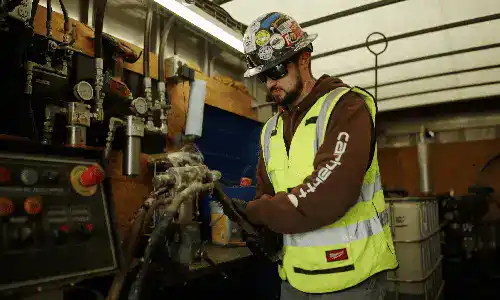
Box Truck
The entire polyurethane grouting operation runs from a self-contained box truck. Inside, a generator and heaters prepare the unmixed liquids at a 1:1 ratio before pumping them through heated hoses.
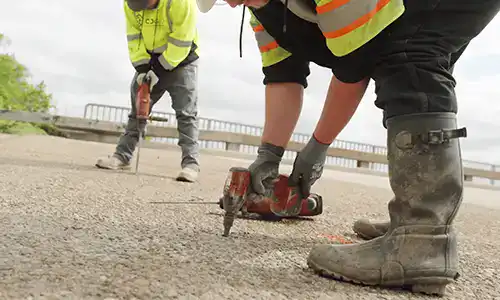
Drilling
Pneumatic drills create a precise grid of 5/8" injection holes, keeping the process fast, quiet, and nearly invisible once patched. Mechanical packers or steel tubing are then inserted to ensure clean, targeted material placement beneath the structure.
Installing
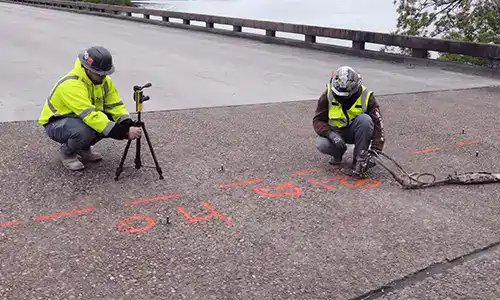
A specialized pump mixes the two liquid components at a precise 1:1 ratio at the nozzle. Once injected into voids, the liquid expands into a rigid, high-density foam that compacts surrounding soils. Elevations and movement are monitored with laser levels. Reaching 95% cure in just 15 minutes allows structures to be reopened almost immediately.
Speak With An Expert
Facing a challenge?