
Lightweight Fill
Been There. Grouted That.®
Lightweight fill replaces traditional aggregates, such as stone or soil, to reduce axial and lateral loads on civil and commercial infrastructure. There are multiple types of lightweight fill, ranging from aggregates to styrofoam. CJGeo manufactures and installs two primary lightweight fill solutions: low-density cellular concrete and geotechnical polyurethane.
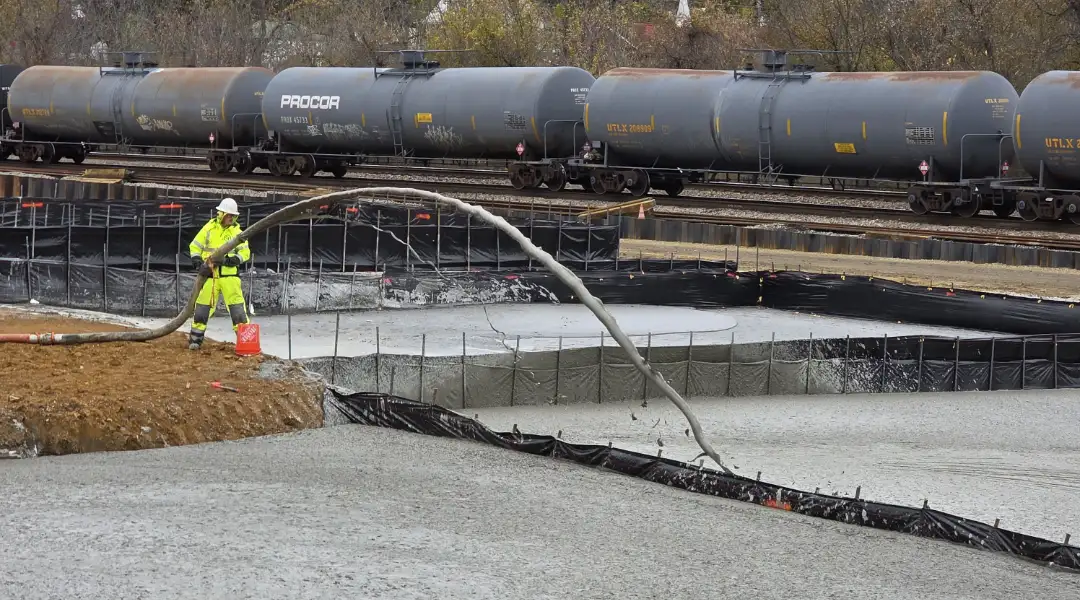
Low-Density Cellular Concrete
Low-density cellular concrete is a self-supporting, self-consolidating fill with densities from 25 to 80 PCF, as low as 1/4 the weight of traditional backfill. Ideal for raising grade over weak subgrades and backfilling retaining walls without compaction, cellular concrete offers unmatched versatility. Learn More
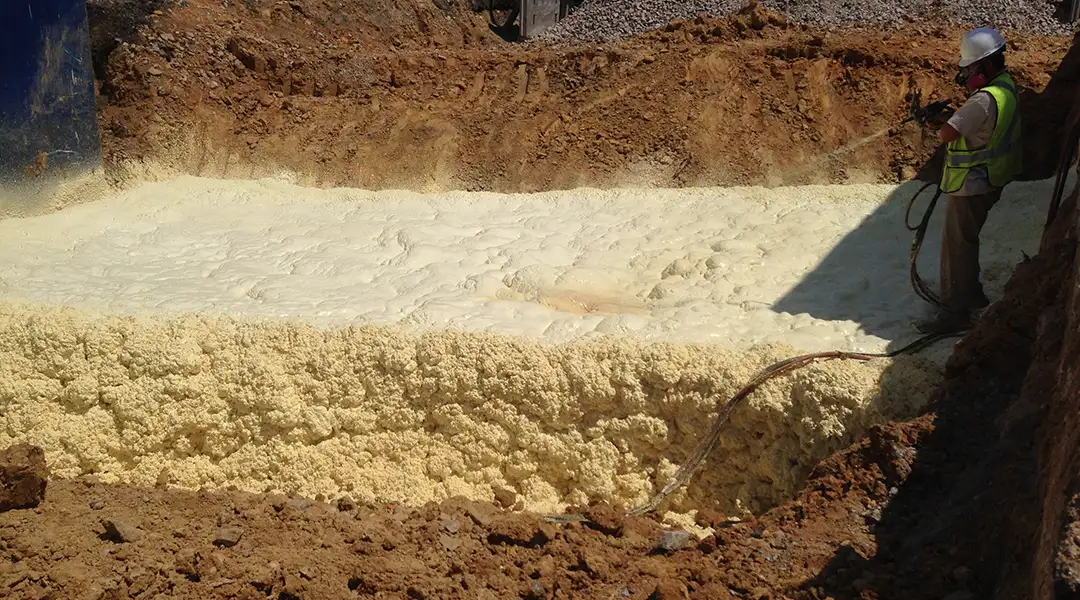
High Density Geotechnical Polyurethane
High-density geotechnical polyurethanes are injected as liquids that rapidly expand into rigid cellular plastics. Conforming to any shape, these lightweight polymers weigh between 2 and 10 PCF and provide allowable bearing capacities starting around 3,000 PSF. Learn More
Related Services
Void Filling
Both low-density cellular concrete and geotechnical polyurethane grouts effectively fill large voids and stabilize structures with minimal footprint or downtime.
Axial Load Reduction
Low-density cellular concrete and geotechnical polyurethanes minimize dead load overburden adjacent to retaining structures, over compressible soils, and above below-grade infrastructure.
Lateral Load Reduction
CJGeo’s lightweight fill minimizes lateral pressures on retaining structures, while optimizing foundation design and reducing or even bypassing deep foundations.
Marine Fills
Specially formulated cellular concrete mix designs achieve densities greater than water, facilitating underwater placement and reducing axial and lateral loads.
Underground Structure Fills
CJGeo’s lightweight fills reliably fill and stabilize underground tanks, crawlspaces, basements, and mines. They prevent future groundwater infiltration and settlement while satisfying load-bearing requirements
Been There. Grouted That.
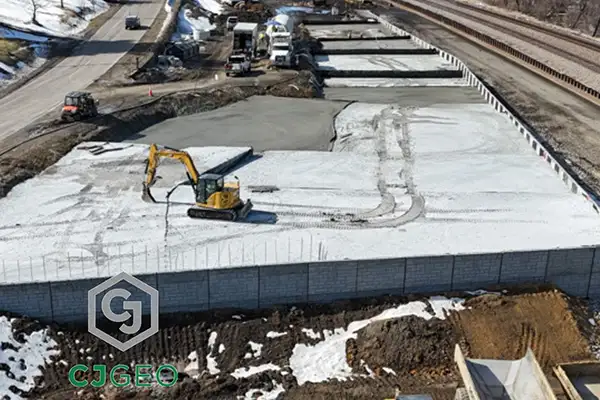
Norfolk Southern New River Valley Passenger Platform Lightweight Fill
To construct a new rail platform over compressible soils, CJGeo placed 12,000 cubic yards of CJFill-UL lightweight cellular concrete. This value-engineered solution safely reduced axial loads and accelerated the project timeline with placement rates exceeding 200 cubic yards per hour. Read More >
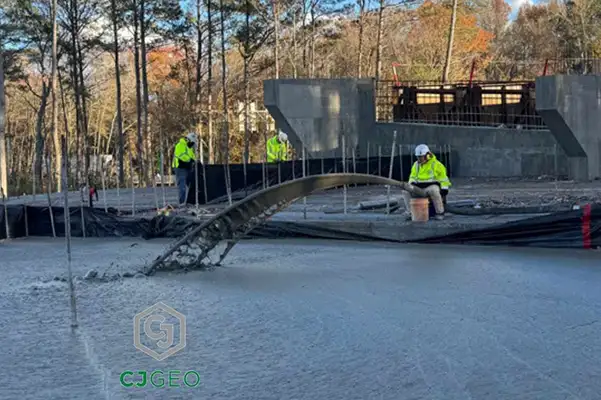
Route 58 Flyover Ramp Lightweight Fill
Panel 19 of the National Mall in Washington, DC, is a high-traffic, 16,000-square-foot lawn area situated directly above a WMATA metro tunnel. For over a decade, this specific section of the Mall was plagued by chronic sinkhole formation, creating significant safety hazards and maintenance challenges. Read More >
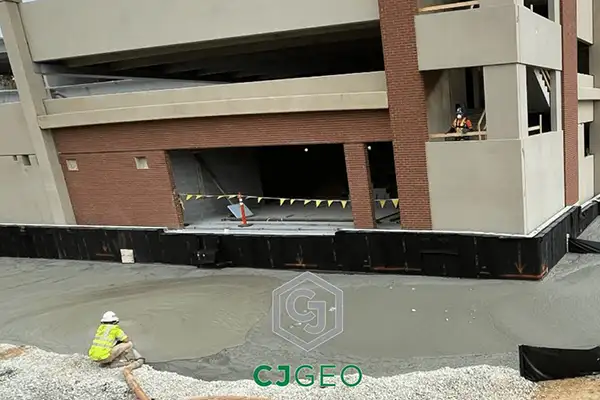
D.C. Parking Deck Lateral Load Reduction
To backfill a new D.C. parking deck engineered with zero tolerance for lateral earth pressure, CJGeo placed 25 lb/cuft CJFill-Ultra Lightweight cellular concrete. This self-supporting, load-reducing fill safely brought the excavated area to grade without compromising structural integrity. Read More >
Advantages of Cellular Concrete vs. Other Lightweight Fill
Load Reduction
Cellular concrete has adjustable densities ranging from 25PCF-80PCF, while polyurethane grouts are as light as 2PCF. Both materials substantially reduce loads on sensitive structures and weak subgrades, can fit any shape, and often enable the construction of net-zero-load designs.
Reduced Costs
Utilizing lightweight fills accelerates construction schedules while value-engineering structural designs. Lowering loads often reduces or eliminates the need for expensive deep foundation systems, complex retaining walls, and soil improvement techniques.
Immediate Traffic
Polyurethane and low-density cellular concrete are both self-consolidating, removing the need for compaction. With mobile batch plants producing up to 200+ cy/hour, placement is much faster, and lifts can be much higher.
Related Materials
Tailored to meet engineering specifications, CJGeo’s CJFill low-density cellular concrete mix designs range from CJFill Ultra-Lightweight, CJFill Higher-Strength, CJFill-Sanded, and CJFill-Underwater formulations. Learn More


CJGrout polyurethane grouts have unique properties developed to solve targeted geotechnical and structural problems. From void filling beneath existing structures to spray-applied lightweight fill applications, there’s a CJGrout for that. Learn More
Cellular Concrete Generation Methods
Matching the exact generation method to individual project volume ensures optimal efficiency. CJGeo manufactures and installs CJFill low-density cellular grout in two ways.
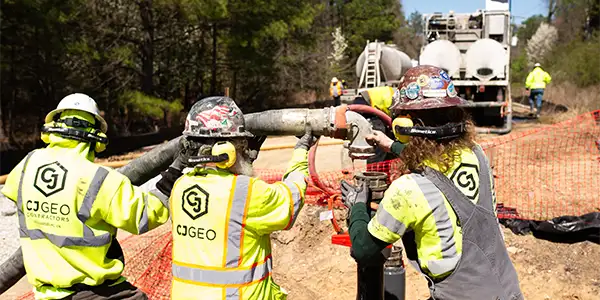
Dry Batch | Higher Volume or Deep Lifts
Computerized on-site plants utilize high-energy colloidal mixers to combine dry materials and water, creating a structural matrix that protects entrained bubbles for lifts up to 10 feet. Three highly mobile tandem-chassis plants maximize efficiency, reliably placing up to 200+ cubic yards per hour. Learn More about Dry Batch cellular concrete generation.
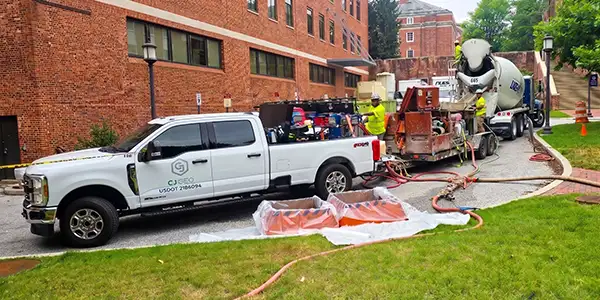
Wet Batch | Lower Volume or Tight Access
Utilizing traditional ready-mix trucks to deliver cement slurry, foam is injected directly on-site. CJGeo’s three dedicated wet batch systems generate up to 70 cubic yards per hour, ensuring an economical, highly efficient solution for smaller placements and confined job sites. Learn more about Wet Batch / Truck Batch cellular concrete generation.
Polyurethane Grout Installation Process
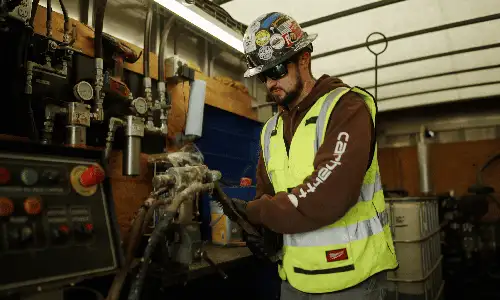
Box Truck
The entire polyurethane grouting operation runs from a self-contained box truck. Inside, a generator and heaters prepare the unmixed liquids at a 1:1 ratio before pumping them through heated hoses.

Drilling
Pneumatic drills create a precise grid of 5/8" injection holes, keeping the process fast, quiet, and nearly invisible once patched. Mechanical packers or steel tubing are then inserted to ensure clean, targeted material placement beneath the structure.
Installing
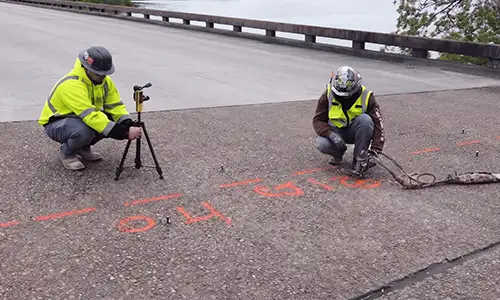
A specialized pump mixes the two liquid components at a precise 1:1 ratio at the nozzle. Once injected into voids, the liquid expands into a rigid, high-density foam that compacts surrounding soils. Elevations and movement are monitored with laser levels. Reaching 95% cure in just 15 minutes allows structures to be reopened almost immediately.
Speak With An Expert
Facing a challenge?
