The Job
This VDOT lightweight fill infrastructure improvement project was located on Route 58 in Suffolk, Virginia. A large regional landfill required trucks to cross three lanes of opposing high-speed traffic to access the facility. This created significant safety concerns for the Virginia Department of Transportation, leading the agency to construct a new flyover ramp to eliminate the hazardous at-grade intersection.
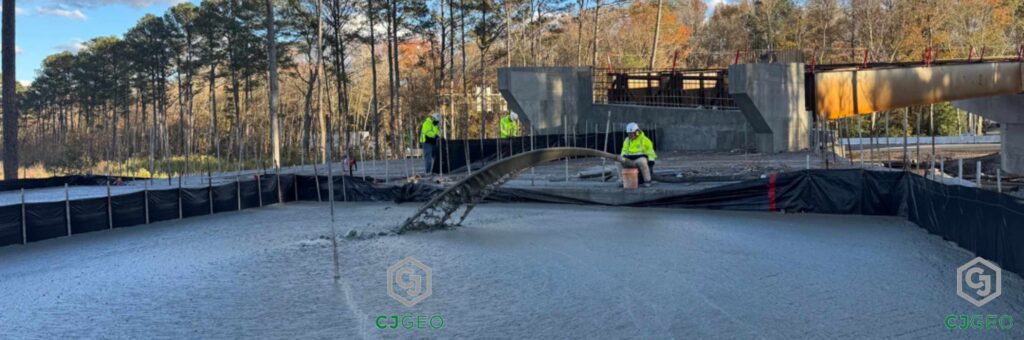
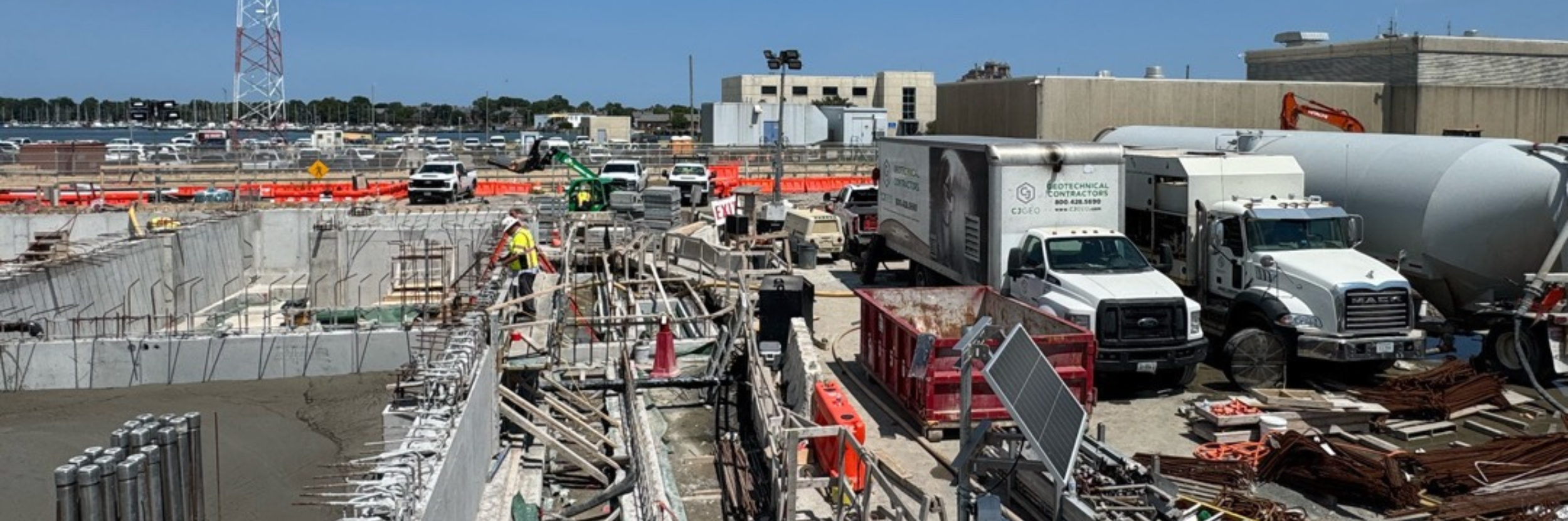
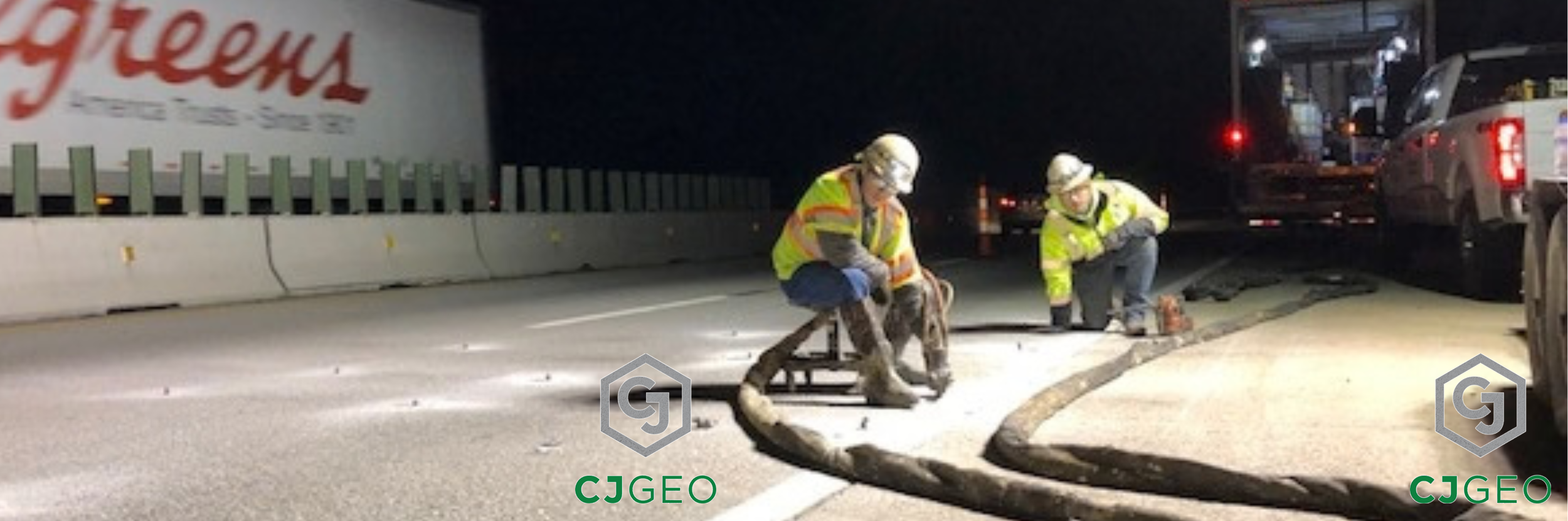
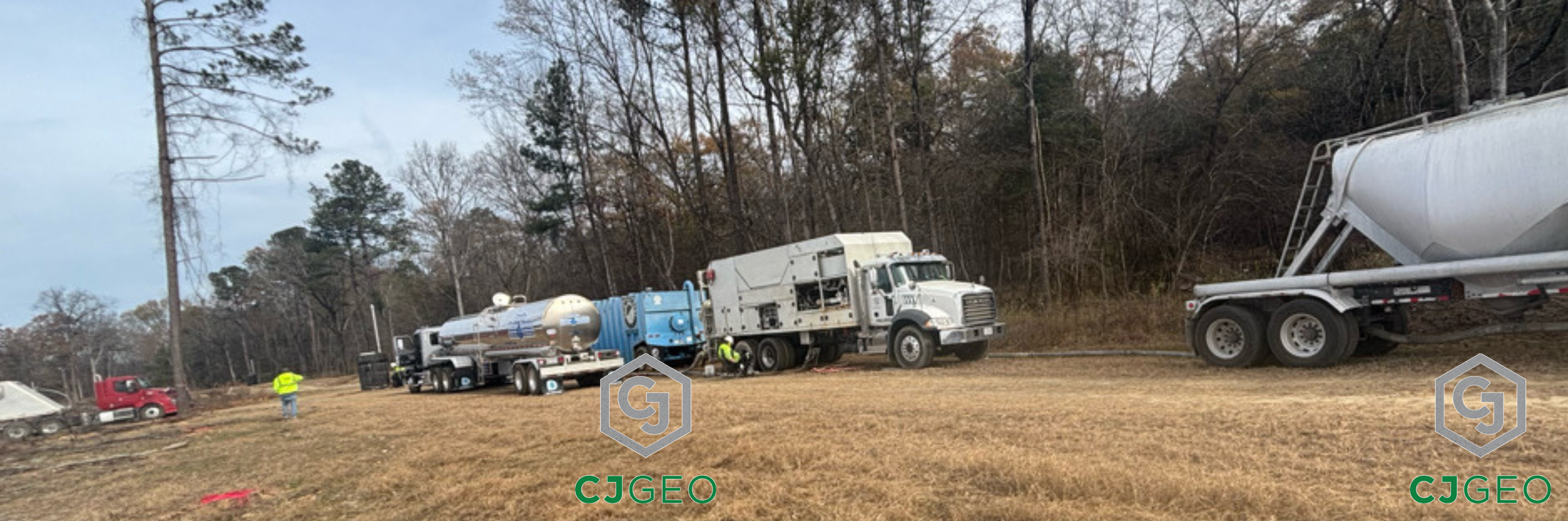
CJGeo Contractors pouring CJFill Ultra Lightweight Fill Cellular Concrete
The Challenge
The primary geotechnical challenge in this area of Virginia is the presence of significant underlying compressible soils. Building heavy earthen embankments over these soils would cause unacceptable settlement. The original design called for Expanded Polystyrene (EPS) foam blocks to build the embankments on each end of the bridge with a stepped configuration on the north ramp and a tilt-up wall approach on the south end.
However, the EPS foam design presented several difficulties for the project team. Sourcing and transporting the large volume of foam blocks posed scheduling and logistics challenges. Additionally, the EPS design required a reinforced concrete load distribution slab on top of the blocks, adding cost and time to the construction schedule. Finally, the foam required a thick soil cover, further increasing the dead load on the sensitive underlying soils.
The Solution
CJGeo worked with the contractor to propose a Value Engineering (VE) design. The team suggested using 25lb/cuft CJFill-Ultra Lightweight cellular concrete retained by Gravix modular precast walls, offering multiple advantages over the original design.
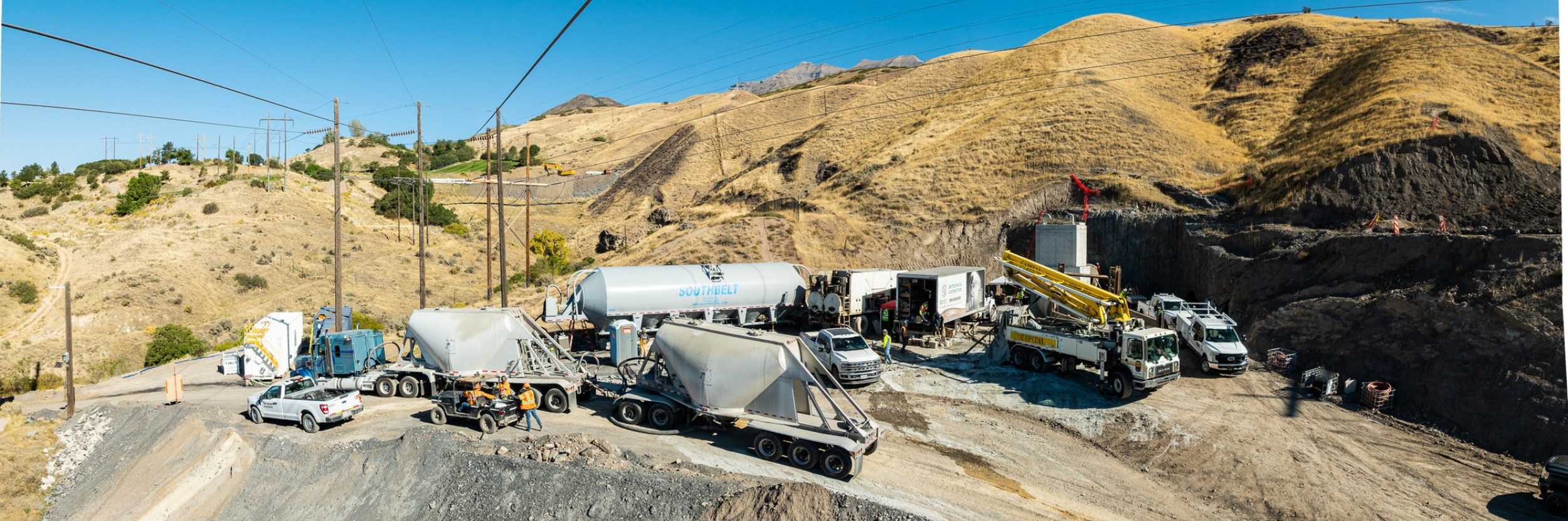
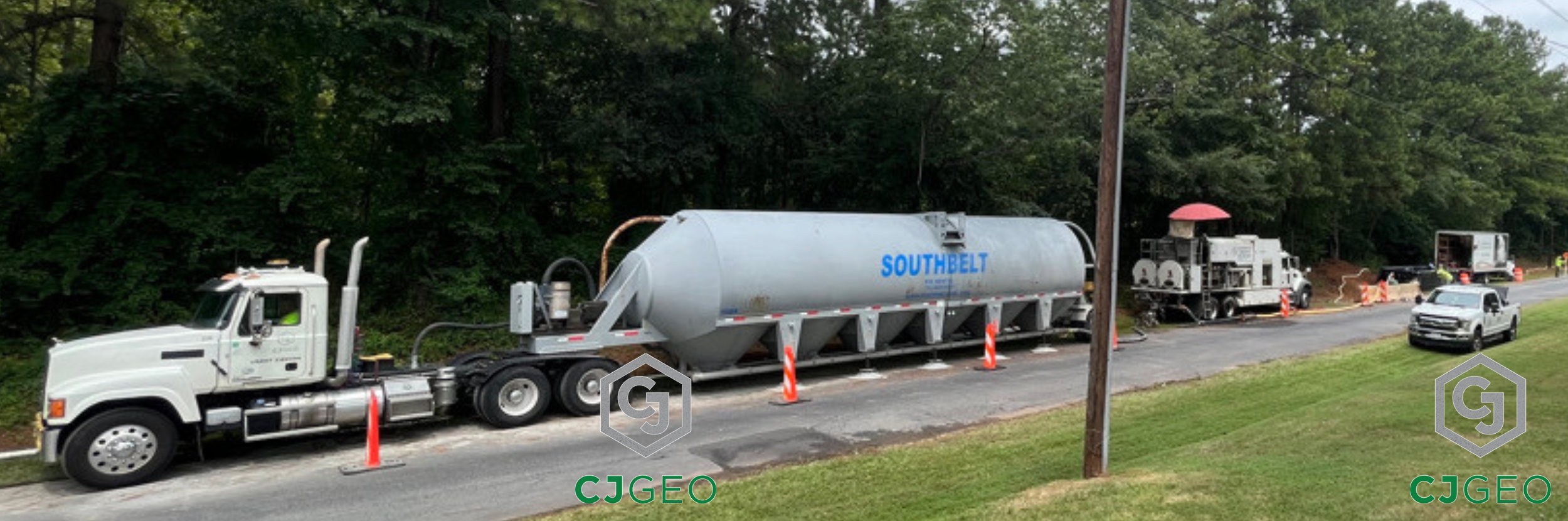
CJGeo performed the work using an on-site dry batch generation plant, eliminating the logistical headaches associated with shipping and storing massive amounts of EPS blocks. This high-capacity setup allowed the crew to place up to 1,000, of the total 14,000, cubic yards of material per day. The rapid placement rate helped the contractor accelerate the overall project schedule.
Additionally, switching to cellular concrete removed the need for the concrete load distribution slab and allowed for a thinner cover depth over the fill. Even though cellular concrete is slightly denser than EPS foam, removing the slab and reducing the cover depth offset the weight difference. Consequently, the project required no additional undercutting or ground improvement.
Speak With An Expert
Facing a challenge similar to this Route 58 flyover ramp VDOT lightweight fill project?