
Settlement Correction & Ground Modification
Settlement and unstable soils severely compromise the integrity of critical infrastructure. CJGeo collaborates with engineers, owners, and contractors to diagnose subgrade issues and implement engineered solutions based on precise geotechnical data.
Advanced polyurethane and chemical grouting technologies are utilized to stabilize subgrades, fill subterranean voids, and return sunken structures to their original elevations.
Polyurethane Grouting
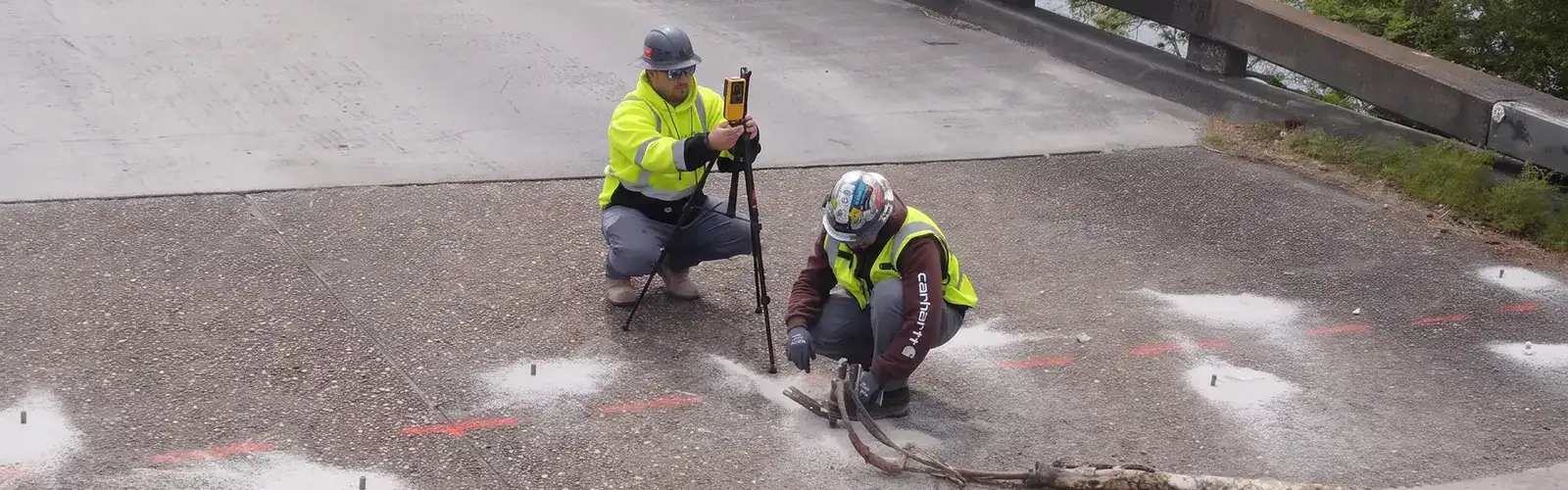
Specified when geotechnical data reveals compressible soils, loose fill, or eroded subgrades. Expanding polymers densify weak soils deep below the surface, stop active leaks, and fill voids to restore structural integrity. Learn More >

Undersealing & Void Filling
Water intrusion and subgrade washouts often create hidden hazards beneath commercial floors, roadways, and foundations.
- Undersealing. Polyurethane and low-viscosity chemical grouts can be injected to fill small voids below concrete slabs where water accumulates and seeps through cracks or joints to the surface. Learn More >
- Void Filling. Polyurethane grouts can be injected below surfaces where voids exist, expanding to fill cavities beneath structures while adding minimal load compared to flowable fill. Learn More >
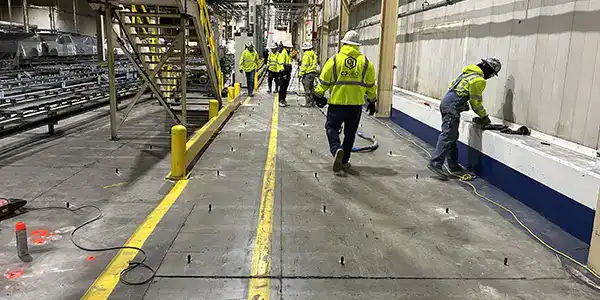
Concrete Lifting & Compaction Grouting
Water intrusion and subgrade washouts often create hidden hazards beneath commercial floors, roadways, and foundations.
- Concrete Lifting. Polyurethane grouts expand upon injection with controlled upward pressure to lift and level sunken structures. This is often used in combination with compaction grouting to fully stabilize soils below structures. Learn More >
- Compaction Grouting. Polyurethane grouts are injected through small steel tubing to depths up to 35’ in stages. As the polyurethane expands, it displaces and compresses the adjacent soil, curing to 95% within 15 minutes. Learn More >
Permeation Grouting
Permeation grouting utilizes low-viscosity grouts to uniformly saturate subgrade soils and fill, reducing permeability while increasing stability and bearing capacity. Permeation grouting excels in saturated environments and confined job sites. Learn More >
Utilized when running sands or granular soils require increased bearing capacity or strict water cutoff. Specialized chemical grouts permeate the subgrade to firmly bind shifting soil particles together. Learn More >
Been There. Grouted That.®

Illinois Polyurethane Grouting
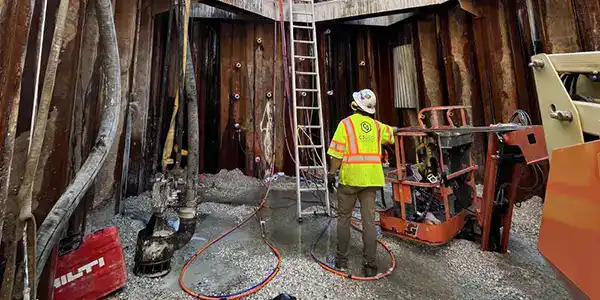
After a tunneling shaft failed at O'Hare, causing soil loss and surface settlement, CJGeo performed remedial polyurethane compaction grouting. Crews injected CJGrout 22SHV to safely fill large voids. The fast-curing foam stabilized the soil, allowing the customer to repave the very next day. Read More >
Seawall Curtain Grouting
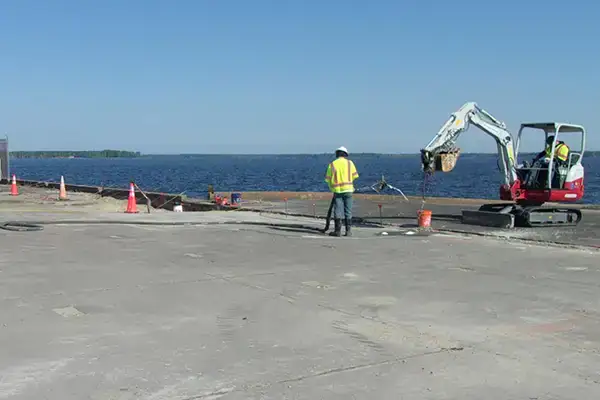
When sinkholes threatened a half-mile federal seawall, CJGeo performed polyurethane curtain grouting as an eco-friendly alternative to jet grouting. Crews injected CJGrout 22SHV to seal the wall, saving the owner $1.7M and avoiding costly excavation or operational disruptions. Read More >
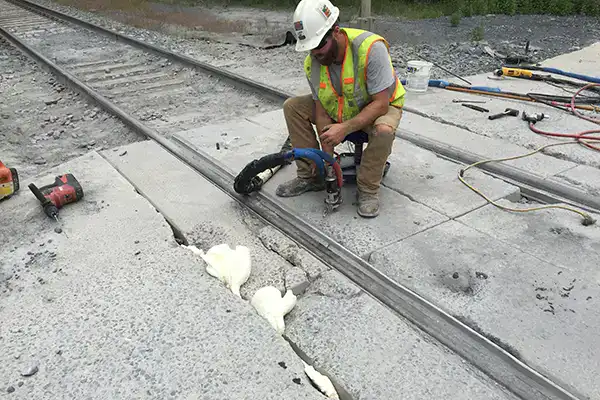
Maryland Concrete Lifting
When heavy traffic caused two Maryland rail crossings to settle, CJGeo performed polyurethane concrete lifting to restore them. Crews injected CJGrout 48NHL, a highly durable, elastomeric grout, to stabilize the base and lift the panels, repairing both crossings in just two days. Read More >
Related Materials
CJGrout Polyurethane Grouts
CJGrout®, CJGeo’s own line of polyurethane grouts, is formulated to suit a wide variety of projects. Different formulations offer tailored properties, such as faster or slower expansion, hydro-insensitivity, and different lifting pressures, ensuring there’s the right product for each job.

Acrylic Grouts
Engineered with water-like viscosity, non-expansive acrylic grouts uniformly permeate soils without fracturing the subgrade. These formulations are often specified to halt groundwater intrusion and glue soils together. Acrylics excel when access is critical, yielding an impermeable yet hand-excavatable soil mass.
Mineral Grouts
Mineral grouts, such as colloidal silica, feature exceptionally low viscosity and highly controllable reaction profiles. These formulations are completely non-expanding and non-exothermic. Mineral grouts are well suited for permeation grouting through TAM tubing and water cutoff applications.
Prepolymer Chemical Grouts
Prepolymer chemical grouts react with moisture to expand up to 30 times their original volume. Geotechnical site conditions dictate the selection of grouts, while in the field, precise catalysts control the reaction profile. Set times are engineered to match soil characteristics, ambient temperatures, leak volumes, and flow velocity.

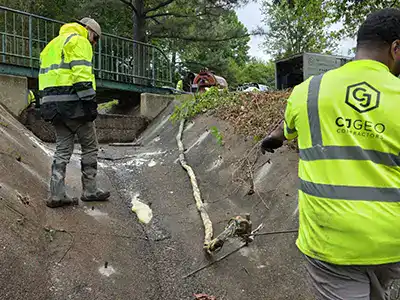
Undersealing
CJGrout 35NHV | SF6523

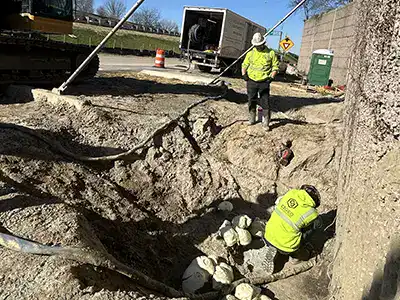
Concrete Footing Lifting
CJGrout 40NHL | SF6218
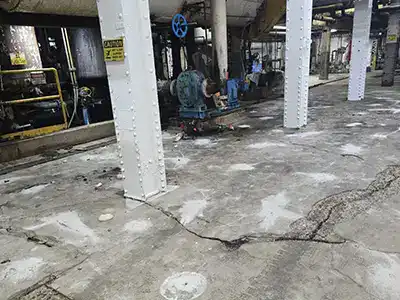
Void Filling
CJGrout 20SDB | SF3827
Advantages of Chemical Grout vs Cementitious Grout
Cleaner
Chemical and polyurethane grout’s drilling is rapid and discreet, and the injection itself is virtually noiseless. Equipment is self-contained in a box truck or palletized system that can stage up to 400 feet away, keeping heavy machinery out of sight and minimizing disruption.
Less Disruptive
Chemical and polyurethane grout drilling is rapid and discreet, and the injection itself is virtually noiseless. Equipment is self-contained in a box truck or palletized system that can stage up to 400 feet away, keeping heavy machinery out of sight and minimizing disruption.
Immediate Traffic
Polyurethane grouting and chemical grouts have quick reaction and setup time. The treated area instantly resumes normal operations, providing the bearing capacity required to support heavy trucks, industrial equipment, and trains.
Fast
Permeation and polyurethane grouting can be installed up to 12 times faster than cement. Equipment design facilitates repairs to begin within minutes of arrival. Smaller drill holes and a wider lifting radius allow repairs to be completed faster and more efficiently.
Lightweight
Polyurethane grouts, permeation, and chemical grouts are exceptionally lightweight, minimizing overburden on soils and preventing resettlement. With strength properties similar to soil, polyurethane grout is a versatile alternative to EPS foam blocks for lightweight fill applications.
Waterproof
High-density polyurethanes and some chemical grouts are hydrophobic and can be installed directly in water, facilitating installation into environments with active flow. Because of the near-immediate curing, water-stopping jobs are fast and easily tested on site for efficacy.
Speak With An Expert
Facing a challenge?