
Polyurethane Grouting
Millions of pounds and counting.
Polyurethane grouting is a cleaner, faster and less disruptive than cement grouting. From commercial floors to interstates, and everything in between, polyurethane grouting is economical, fast and effective for correcting settlement and instability.
Two polyurethane liquid components are mixed and injected (hence also being called polyurethane injection) under pressure below the area or structure being repaired. The two liquids react with each other, expand and harden, like the foam you get in a can to seal around windows. Our polyurethane grouts stay a liquid for a few seconds before expanding. This helps them spread out from the exact spot they’re injected, but then get harder much faster, and can exert much more force during expansion. We have developed our own line of polyurethanes, CJGrout. CJGrout formulations are based on CJGeo’s extensive polyurethane grouting experience, and backed by the polyurethane manufacturing expertise of NCFI Polyurethanes.
Related Services
Undersealing
Polyurethane can be used to seal under concrete and stop water from coming through. Learn More>
Void Filling
A quick sentence about the topic above giving a high level overview. Learn More>
Annular Space Grouting
A quick sentence about the topic above giving a high level overview. Learn More>
Seepage Control
Polyurethane can be used to seal under concrete and stop water from coming through. Learn More>
Crack Injection
A quick sentence about the topic above giving a high level overview. Learn More>
Concrete Lifting
A quick sentence about the topic above giving a high level overview. Learn More>
Been There Grouted That
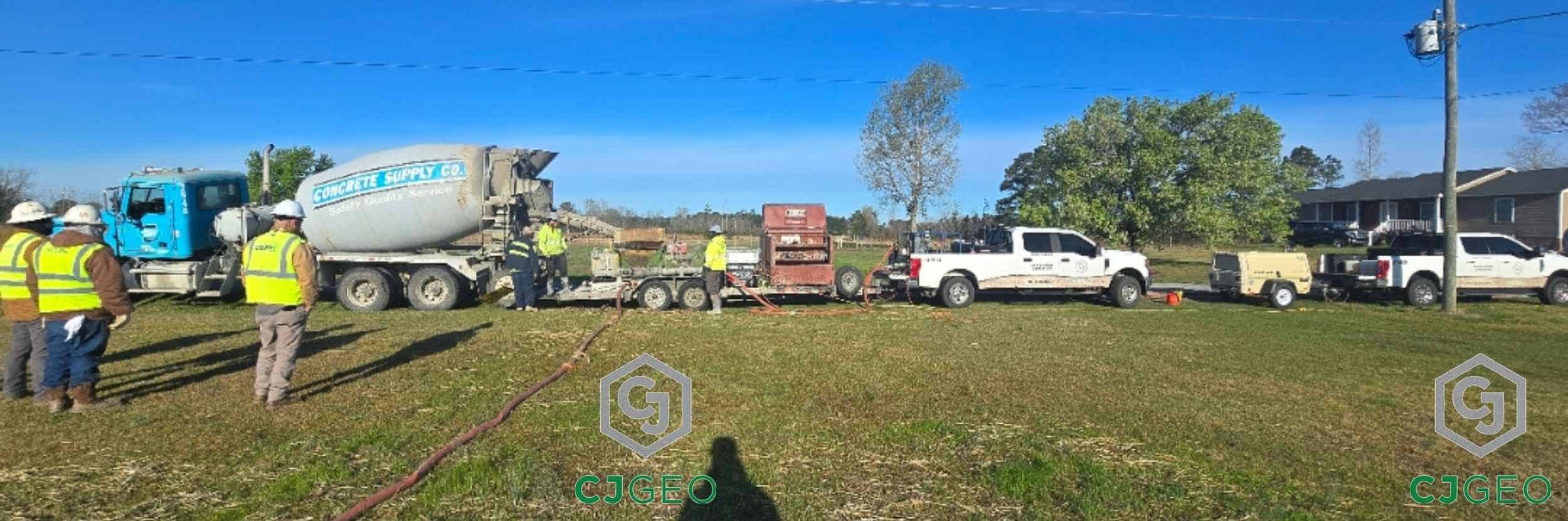
National Mall Sinkholes
Panel 19 of the National Mall in Washington, DC, is a high-traffic, 16,000-square-foot lawn area situated directly above a WMATA metro tunnel. For over a decade, this specific section of the Mall was plagued by chronic sinkhole formation, creating significant safety hazards and maintenance challenges. Read More >
Related Materials
We manufacture our own CJGrout, and can create a wide variety of products with different specialties. That means we can always find the right product for the job. To learn more about our different lines, check them out there. Learn More >

Polyurethane vs Cementitious Grout
Polyurethane grouting excels compared to cement-based grouting primarily due to cleanliness, speed and control. These combine to reduce overall costs compared to cement-based grouting. Polyurethane grouting can be used in place of cement-based grouts. This includes for processes such as compaction grouting, slabjacking, void filling and leak sealing. Polyurethane grouting is…
Cleaner
Polyurethane grouting is the cleanest concrete lifting and stabilization process. The injection equipment is mechanically connected to the slab or structure. Mechanical seals engage when not injecting material, no loose material is introduced to the repair area. Extruded material is easy to clean up because it cures very quickly.
Less Disruptive
Polyurethane grouting is the quietest and fastest process for stabilizing and raising settled concrete slabs. Because of the small hole size, drilling is fast and quiet. There is virtually no noise associated with the injection process itself. The equipment for polyurethane grouting is self-contained in a box truck. The trucks can park up to 400 feet away from the injection point.
Immediate Traffic
Foot traffic during work is functionally OK, and immediate resumption of vehicular traffic after work is completed can be expected. Polyurethane grouting is not affected by foot traffic during the injection process. Vehicular traffic may resume immediately after work finishes. This includes heavy loading such as trucks and industrial equipment like fork lifts, and even trains.
Fast
Polyurethane grouting crews can lift up to 12 times faster than standard slab jacking or mud jacking crews in many situations. Because of the small hole size and ability to lift larger areas per hole, polyurethane grouting is much quicker than slab jacking. Because of the equipment design, upon arriving on a job, polyurethane grouting crews are typically actively lifting slabs within 10 minutes of arrival for typical repairs.
Lightweight
Lightweight material reduces the overburden on underlying soils, reducing the chances for resettlement. Even the highest density polyurethane foams used for polyurethane grouting are significantly lighter than alternative lifting and stabilization materials. This reduces the amount of additional burden weight placed on the underlying soils. Geotechnical polyurethanes are an excellent choice for lightweight fills. Because of their exceptionally low unit weights (down to 2 PCF) and fast cure times (few minutes).
Waterproof
High density polyurethane is waterproof, so treated slabs are thoroughly undersealed. Polyurethane can also be installed in water. So, flow testing or water stop applications with active flows are not a problem. Because of the near-immediate curing, water stopping jobs are fast and easily tested on site to ensure efficacy of the repairs.
Speak With An Expert
Facing a challenge?