The Job
This North Carolina annular space grouting project was part of an initiative in Charlotte to reduce sanitary sewer overflows and accommodate the increased wastewater volume generated by new residential developments. The chosen alignment for the upgraded sewer involved crossing McDonald Avenue. Because the crossing was at a quartering angle, open-cut construction was impossible, and traditional boring would have been difficult. This required the installation of a 600-linear-foot microtunnel. The tunneling operation utilized a 59-inch jacking/casing pipe to house the new 38-inch outside diameter (OD) and 36-inch inside diameter (ID) sewer carrier pipe.
The Challenge
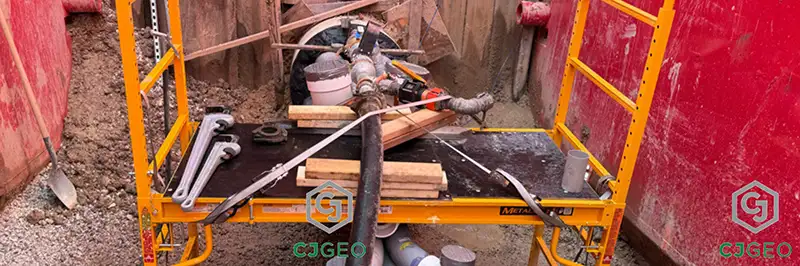
The primary challenge involved efficiently and securely filling the annular space—the void between the 59-inch casing pipe and the 38-inch carrier pipe. Traditional weight grouts would have presented two major problems. First, they would introduce significant buoyancy challenges. Second, they would necessitate multiple placement lifts. Executing multi-lift grouting increases project risk and significantly drives up both labor and material costs associated with the sacrificial placement pipe.
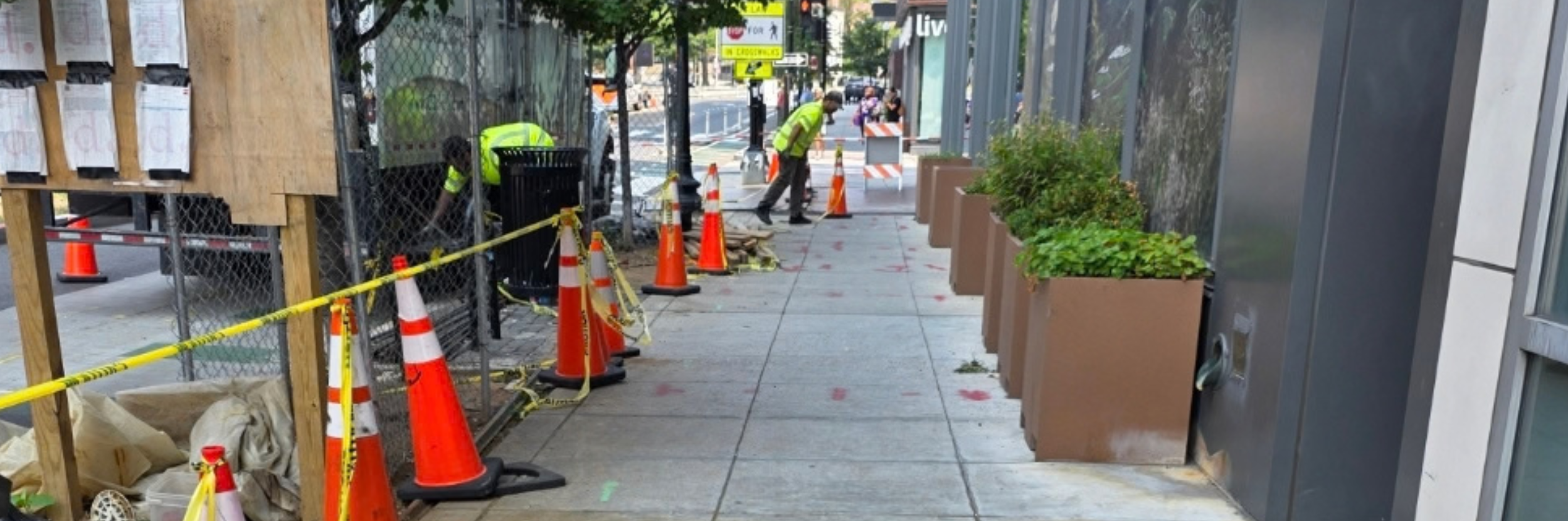
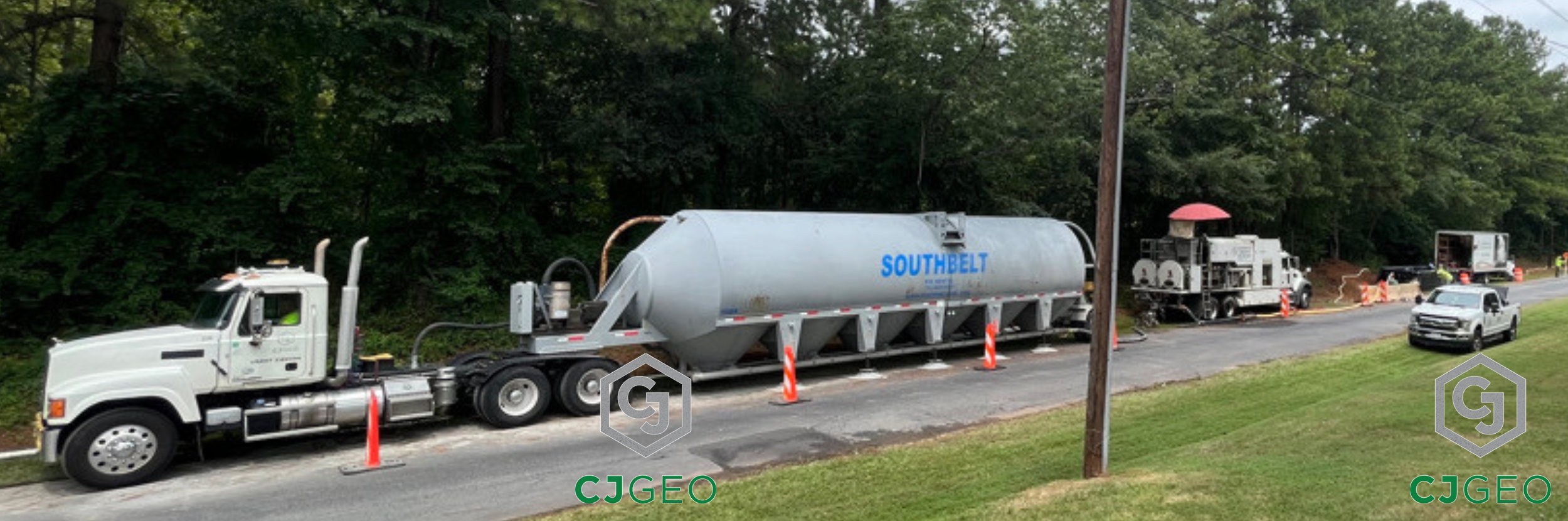
Beyond the technical grouting requirements, the project site itself presented typical urban constraints. Tight access in the city environment demanded that CJGeo's mobile batching equipment maintain a small, efficient footprint throughout the operation.
The Solution
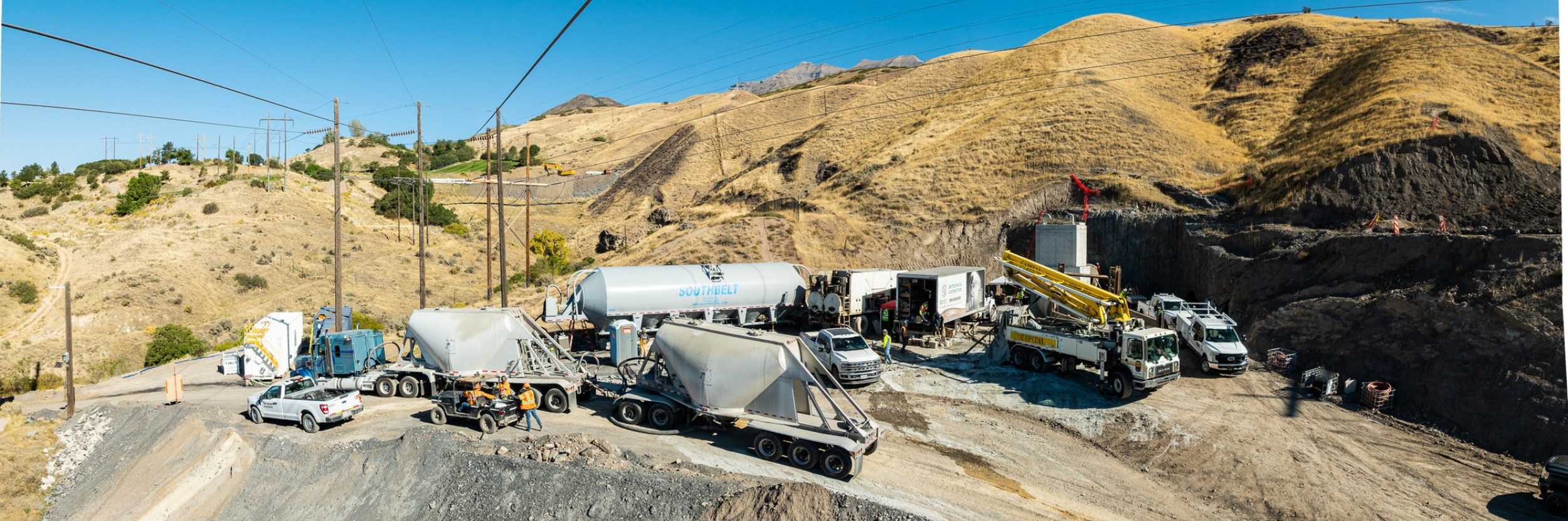
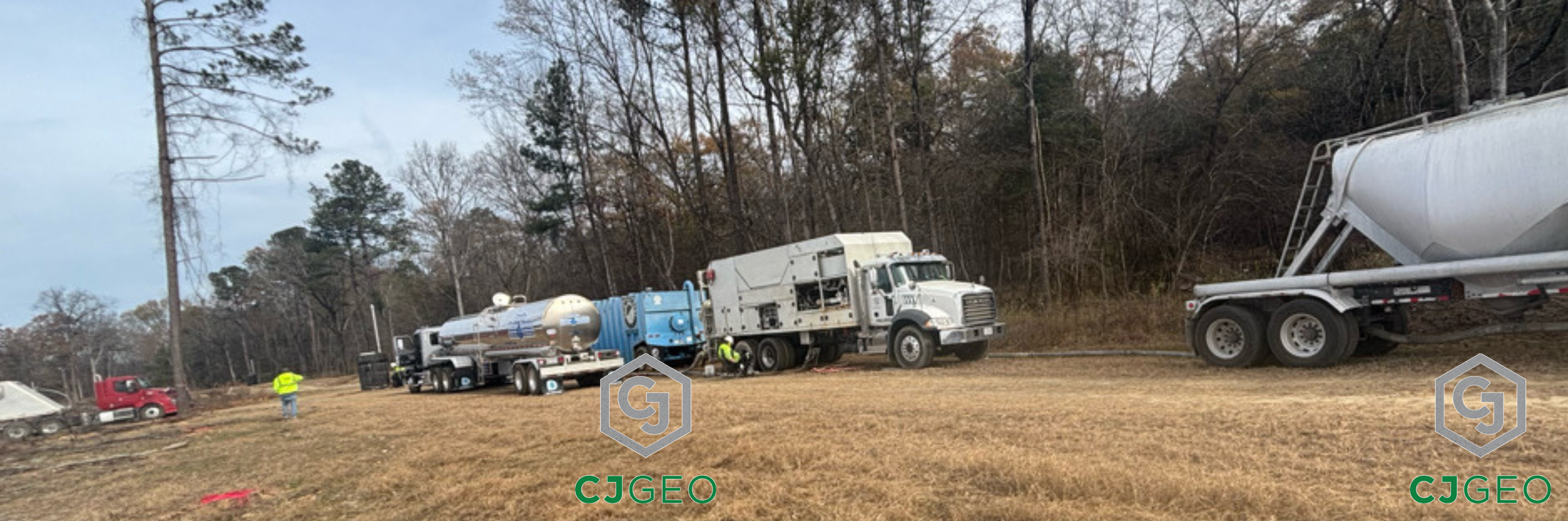
The operation required the placement of 245 cubic yards (CY) of grout, which the CJGeo team completed efficiently in a single work shift, utilizing its high-energy mixing mobile batch plant. This specialized equipment is essential for consistently producing a stable, high-quality cellular grout mix at the required volumes. Crews used a proprietary 30 pounds per cubic foot (PCF) NCDOT-approved cellular concrete mix design. The low density of the cellular concrete provided excellent fill capabilities while effectively managing buoyancy forces on the carrier pipe.
Speak With An Expert
Facing a similar challenge to this North Carolina annular space grouting project?