The Job
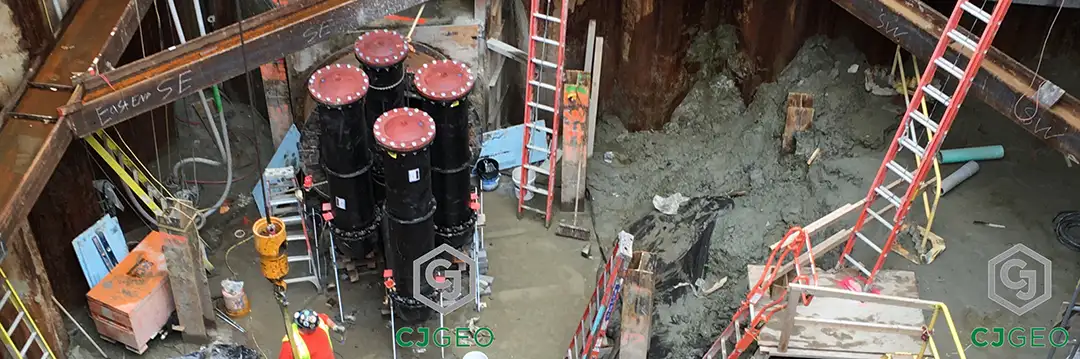
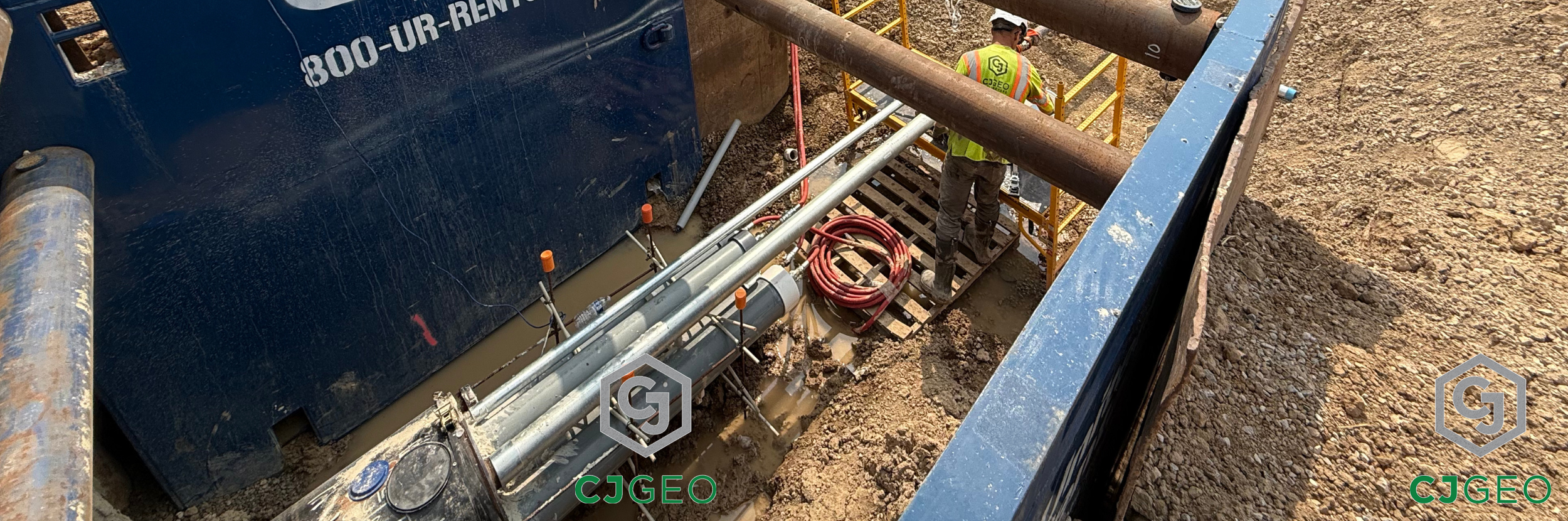
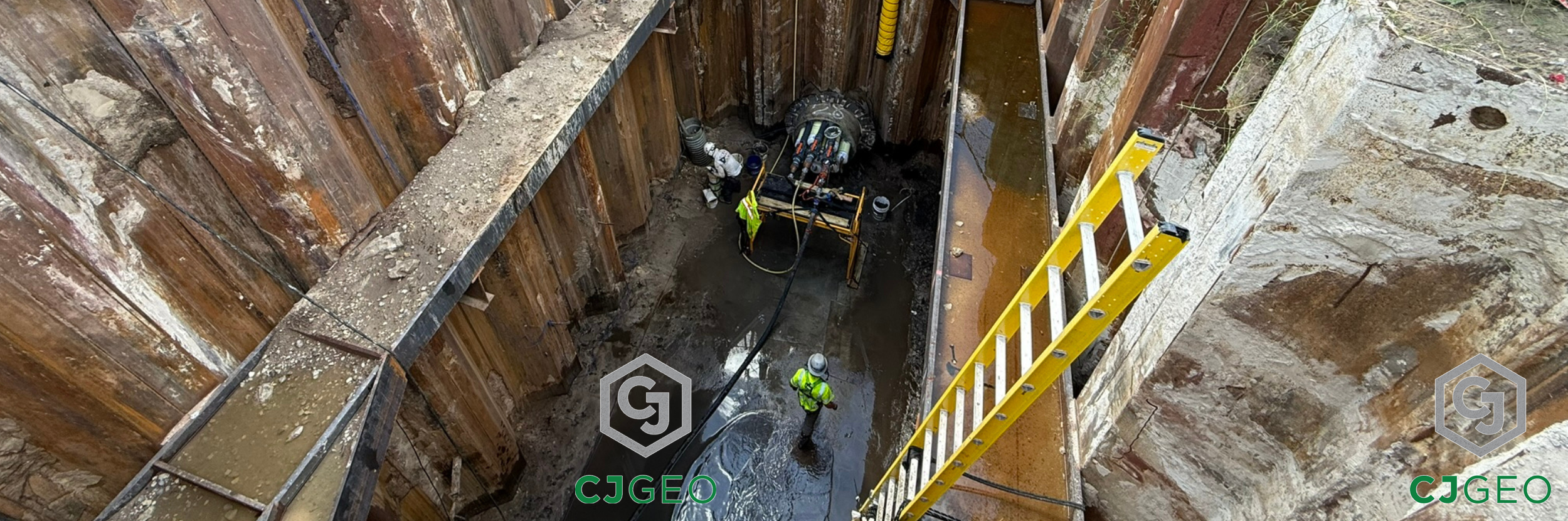
A decommissioned thermal energy plant along the Ohio River in Cincinnati recently began a conversion for adaptive reuse. A critical part of this site conversion involved filling all below grade structures. Our team permanently filled five large intake shafts that ranged from 15 to 65 feet in diameter. These structures reached depths of 80 feet and required 19,500 cubic yards of inert fill.
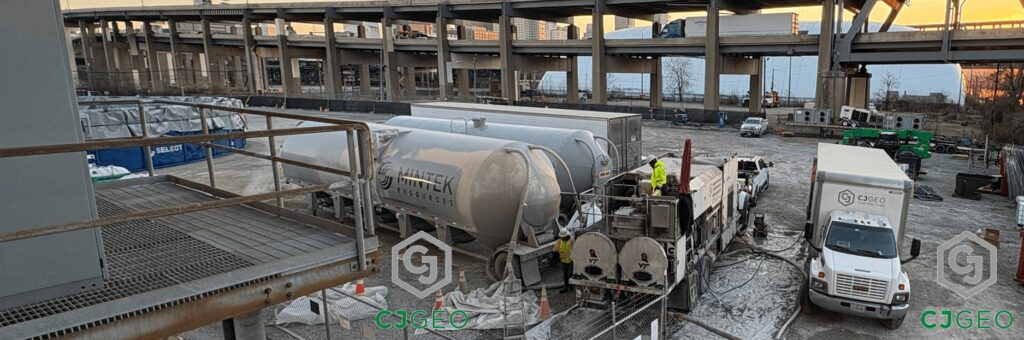
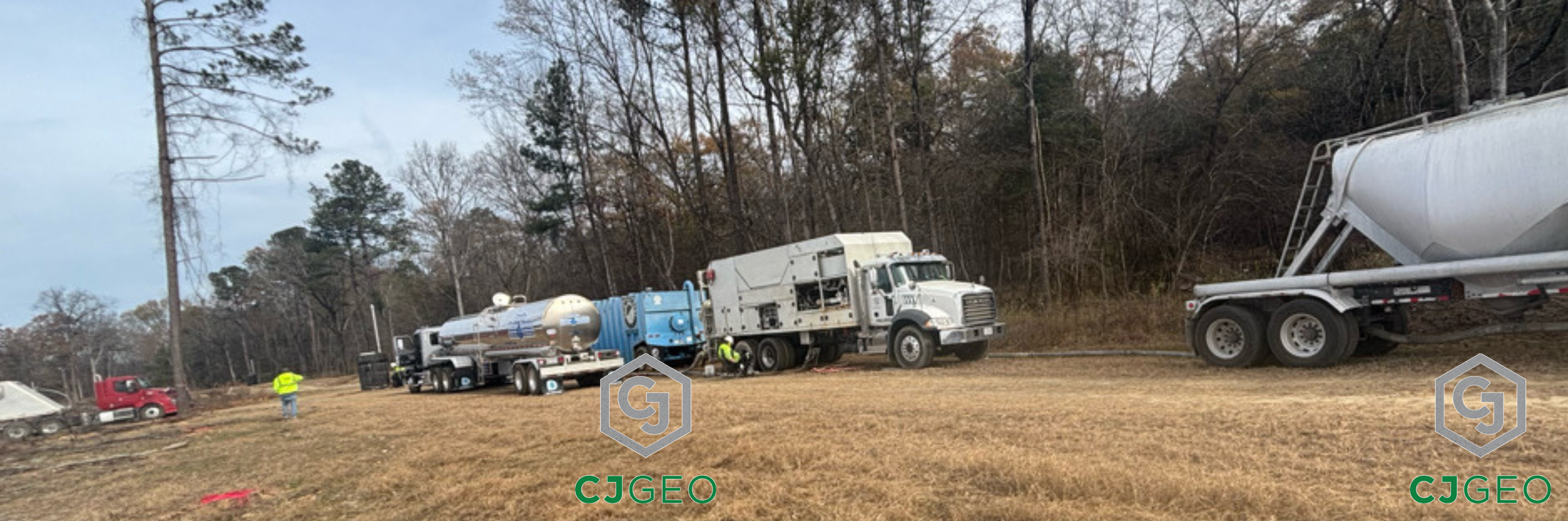
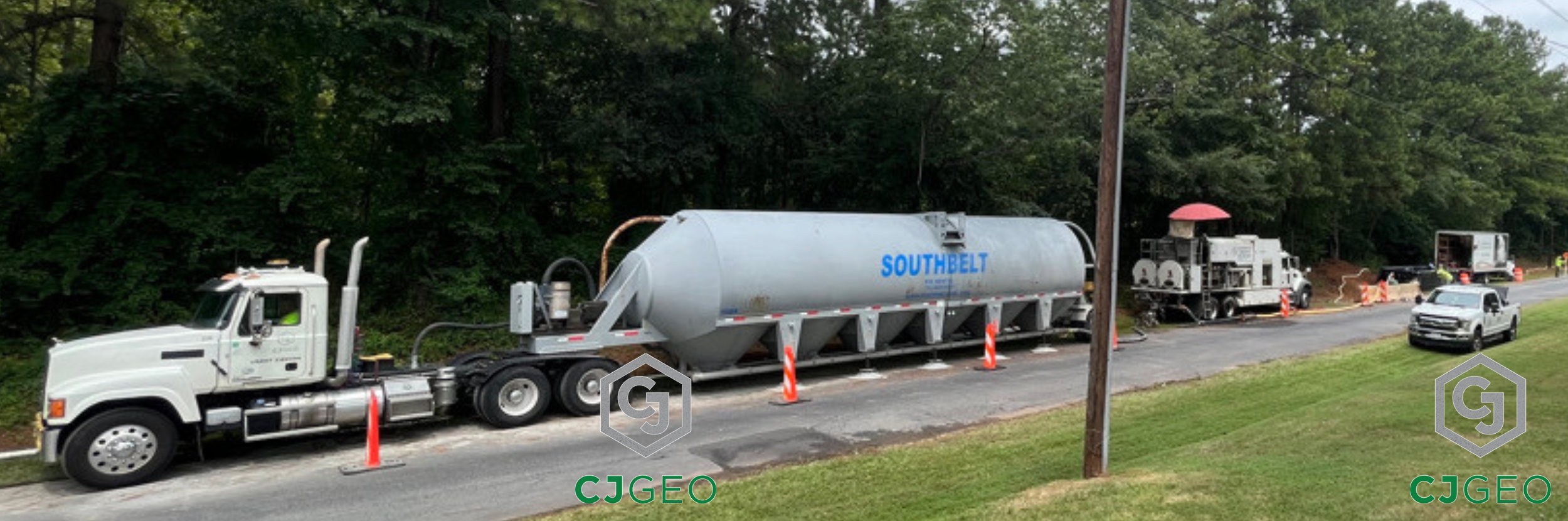
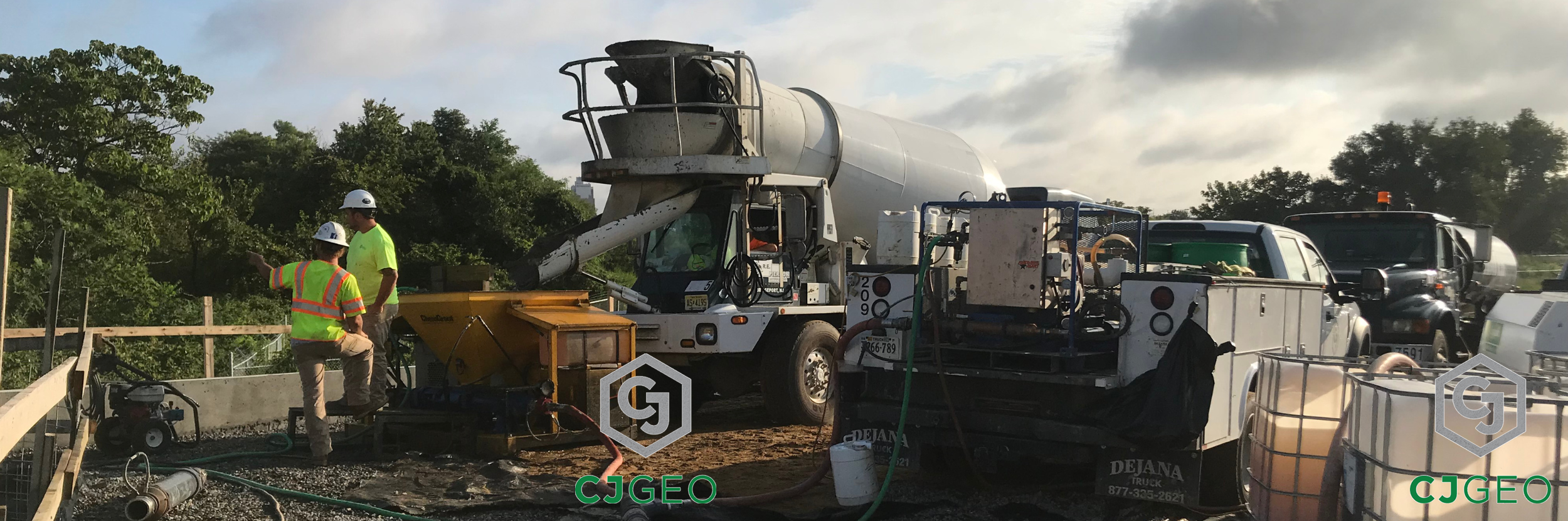
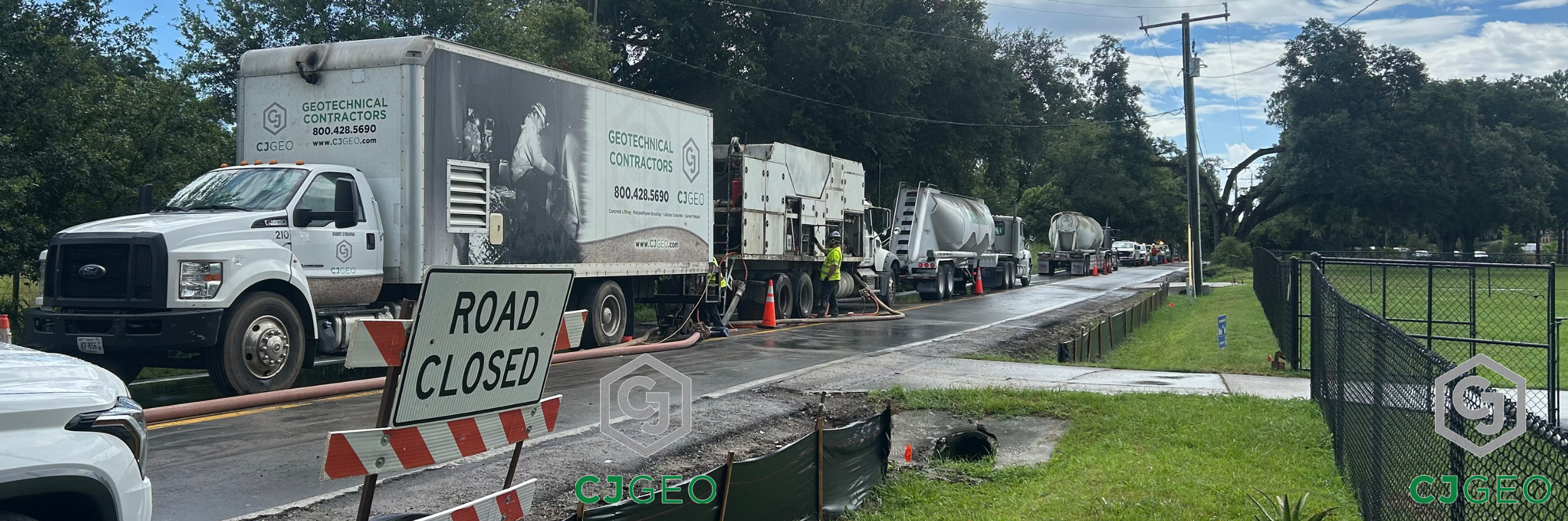
CJGeo placing up to 1200CY/day of CJFill cellular grout.
The Challenge
The primary design goal for this project was to minimize new loads on the soil. Filling such deep, high-volume shafts with standard density flowable fill risked causing significant settlement. To prevent this, the engineer of record designed a specialized load-reducing fill program.
However, the team encountered water issues during the process. After a marine contractor installed discharge line tremie plugs, nuisance water began seeping into the shafts. This infiltration made it difficult to use traditional lightweight grouts that are lighter than water.
The Solution
CJGeo executed the cellular grout shaft abandonment using 25 lb/cuft CJFill-Ultra Lightweight cellular grout. This low-density material significantly reduced the vertical load on the surrounding soil. Our crews maintained high production rates, placing up to 1,200 cubic yards of cellular grout per day. This speed allowed us to complete all five abandonments ahead of schedule.
To address the water seepage, CJGeo switched to a tremie placement method using 70 lb/cuft CJFill-Under Water. This dense grout effectively sealed the entry points near the previous marine work. This two-phase approach successfully completed the cellular grout shaft abandonment while meeting all strict settlement requirements.
Speak With An Expert
Facing a challenge similar to this cellular grout shaft abandonment project?