The Job
This sinkhole leak grouting project is located in Southwest Virginia. An underground minerals mine near Roanoke, Virginia, began losing 8 vertical feet of capacity daily. Significant water infiltration caused this rapid loss.
A follow-up investigation of a nearby stream revealed several sinkholes. These features formed where the stream crossed a geological fault. Two primary sinkholes emerged dangerously close to a public road’s bridge abutments. This road provides the only access for several local homes and farms.
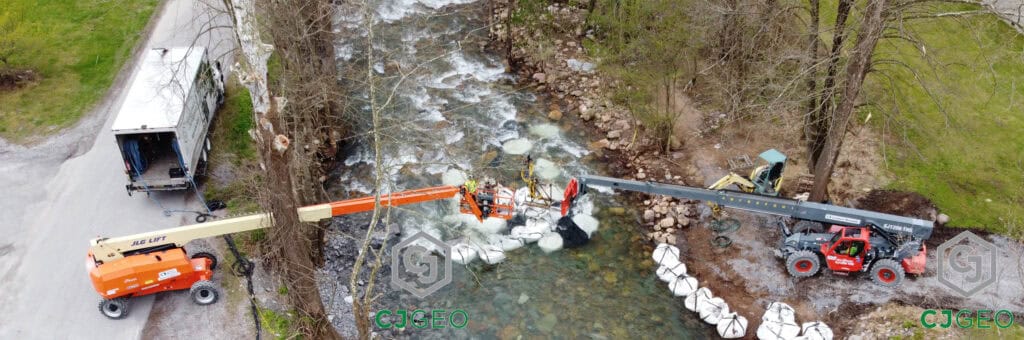
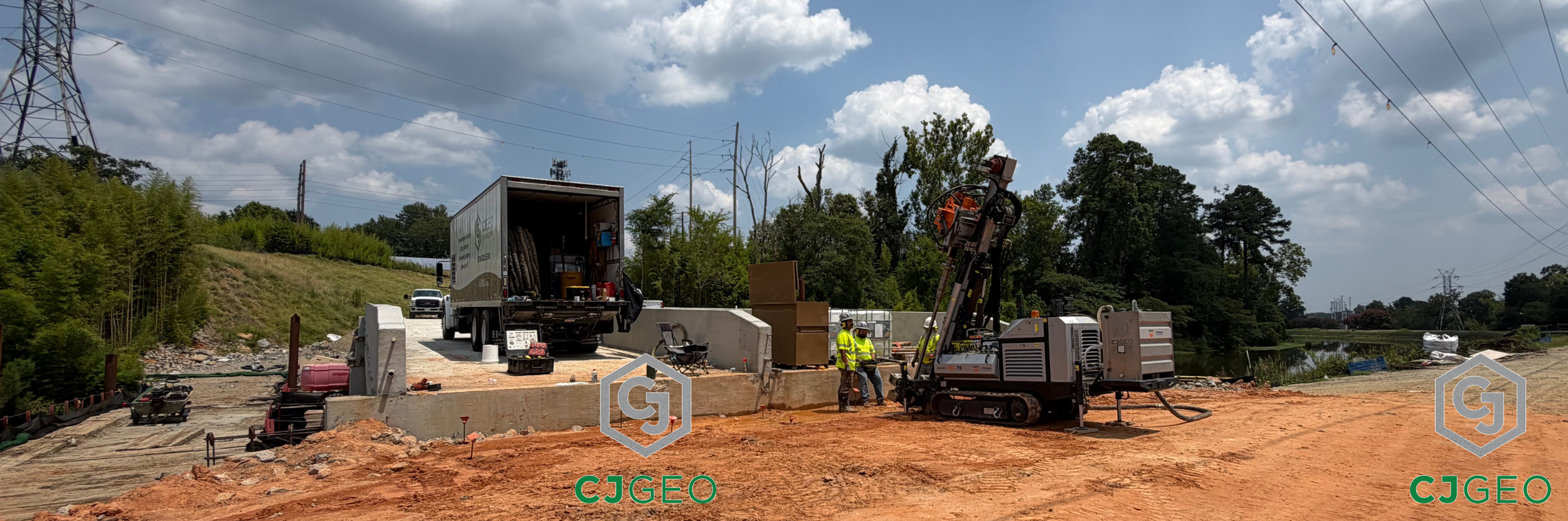
Performing polyurethane grouting on the first sinkhole.
The Challenge
Mine personnel initially attempted self-performed chemical grouting. However, the installation rate was too slow to stop the high-velocity flow. Consequently, the self-performed grouting failed.
Additionally, environmental regulations prohibited cementitious grouts because the stream contains endangered fish habitats. Any chemical grout used for the repair required potable water certification to protect the local ecosystem.
The Solution
CJGeo mobilized two polyurethane grouting crews during the third week of the Covid-19 pandemic. To ensure safe site access, crews performed all grouting from aerial platforms reaching out over the work area. New sinkholes frequently opened as the fault shifted during the process.
To address this, the team dropped super sacs of aggregate into the sinkhole throats to fill large voids. They then performed polyurethane grouting below the aggregate. Using nearly 50,000 pounds of CJGrout 35NHV61, CJGeo successfully stopped the leaks. This allowed the mine to dewater the facility and prevented further sinkhole formation.
Speak With An Expert
Facing a similar challenge to this sinkhole leak grouting project?